
Modular Construction: The Innovative Force Redefining Modern Architecture
Amid the accelerating process of globalization and increasingly tight project timelines, the construction industry is undergoing a profound transformation. The traditional on-site casting mode of reinforced concrete is being gradually supplemented and even replaced by a more efficient, flexible and aesthetically pleasing innovative architectural style—prefabricated construction, or modular construction.
An Innovative Architectural Philosophy: From Construction Site to Factory
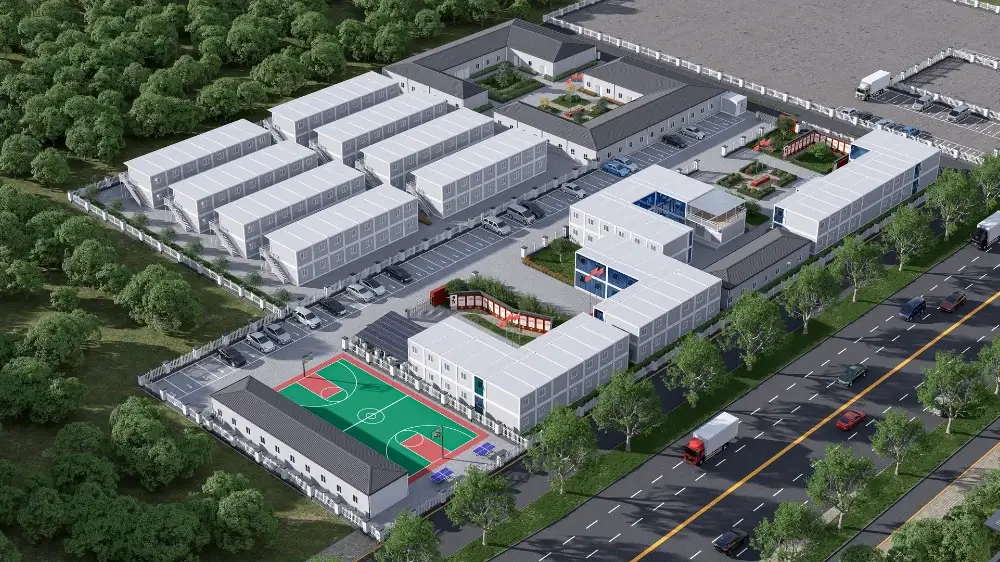
The core of the prefabricated construction system lies in moving construction from open-air sites to modern factories. This shift in model offers countless solutions to the long-standing challenges plaguing the construction industry. It is not merely an increase in construction speed, but a revolution in architectural philosophy. Through advanced technical means, various modules of a building are manufactured rapidly on precision production lines. At the same time, the aesthetic details pursued by designers, such as niches, protrusions and other special shapes, can be accurately realized in the production process, endowing buildings with both speed and aesthetic appeal.
Technological Innovation: Weld-Free Design and High Durability
Take JS-HOUSES, a pioneer in the industry, as an example. Since 2015, its in-depth efforts in the field of prefabricated construction have driven several rounds of technological iteration. Modern prefabricated buildings have abandoned the traditional on-site welding process and adopted an innovative weld-free bolt, nut and snap-fit connection system instead.
The advantages of this technology are self-evident: the main load-bearing steel system is made of high-galvanized metal, which completely eliminates the risk of corrosion at welding points and greatly extends the service life and durability of buildings. Meanwhile, this plug-and-play connection method allows the building structure to be easily disassembled, transported across continents by sea or land, and quickly and accurately assembled upon arrival at the site. With this safe, efficient and ergonomic design, the new generation of prefabricated buildings by JS-HOUSES has been put into safe use in many countries around the world, becoming a solution partner for large-scale projects such as power plants, oil exploration, road construction and even branded residential developments.
A Revolution in Speed: 75% Reduction in Construction Time
In large-scale projects, time is often the most costly resource. Compared with traditional construction methods, the on-site installation time of prefabricated buildings can be reduced by up to 75%. This is attributed to its unique parallel production mode: while the construction site is carrying out foundation work, the factory is simultaneously producing wall panels, roof trusses, installing doors and windows, and pre-embedding water and electrical pipelines.
Thanks to the “plug-and-play” system, whether it is a prefabricated office building, restaurant or dormitory, it can be installed within a few days after delivery to the site and put into immediate use. This speed advantage not only helps contractors meet tight project schedules, but also significantly reduces the average depreciation costs of projects such as office buildings, bringing faster capital recovery and higher return on investment for investors.
Energy Efficiency and Aesthetics: Architecture Beyond Functionality
Prefabricated buildings make no compromises in performance either. Their wall panels adopt a special sandwich structure filled with high-density thermal insulation materials (such as rock wool), and their thermal insulation performance is 60% higher than that of traditional brick or aerated concrete buildings. This excellent thermal insulation performance enables buildings to drastically reduce heating energy consumption in cold winters and lower air conditioning loads in hot summers, achieving genuine energy-saving effects.
In terms of aesthetics, the new generation of prefabricated systems has broken the curse of “easy to design, hard to manufacture” in classical architecture. Comprehensive production detail solutions have freed designers from the constraints of manufacturability. Through real-time monitoring of dedicated production lines, even the most complex designs can be perfectly integrated into the building structure, satisfying modern designers’ pursuit of aesthetic details. This makes prefabricated buildings not just temporary shelters, but also carriers of modern design concepts.
A Comprehensive Building Solution
Prefabricated construction boasts an extremely wide range of applicability. For construction sites, it serves as a logistics base to ensure the on-schedule progress of projects—encompassing everything from management and technical office buildings, prefabricated dormitories and canteens, to human resources offices, sanitary facilities and storage hangars.
For personal and social life, it provides durable and safe living spaces ranging from individual residences and collective housing to emergency resettlement units, hospitals and schools. Especially in the private enterprise and public administration sectors, prefabricated office buildings have become the first choice for astute investors due to their highly competitive pricing and fast delivery capability.
Conclusion
Modular construction (prefabricated construction), with its zero-waste production system, flexible disassembly function, outstanding thermal insulation performance and remarkable construction speed, is redefining modern architecture. It not only addresses the pain points of traditional construction methods, such as long cycles, high costs and great vulnerability to weather conditions, but also, through continuous technological innovation, provides the world with an economical and design-rich new option for modern architecture. Whether as a temporary support for large-scale projects or a permanent private space, prefabricated construction demonstrates enormous potential to become the mainstream architectural style of the future.