
Modular Buildings: An Emerging Force Reshaping the Tourism and Vacation Industry
I. Introduction
Against the backdrop of upgrading tourism consumption, modern travelers are no longer satisfied with traditional hotel accommodation. Instead, they seek accommodation experiences that integrate deeply with nature while combining comfort and personalization. With its unique design philosophy, outstanding performance and flexible application scenarios, JS-HOUSES modular buildings have become an ideal choice for luxury campsites, eco-resorts and cultural tourism projects. Modular architecture is redefining the meaning of “residence” worldwide. Combining the latest industry practices, this paper explores the application status and development prospects of modular buildings in the tourism and vacation sector.
II. Core Advantages of Modular Buildings
1. Strong Terrain Adaptability for Harmonious Coexistence with Nature
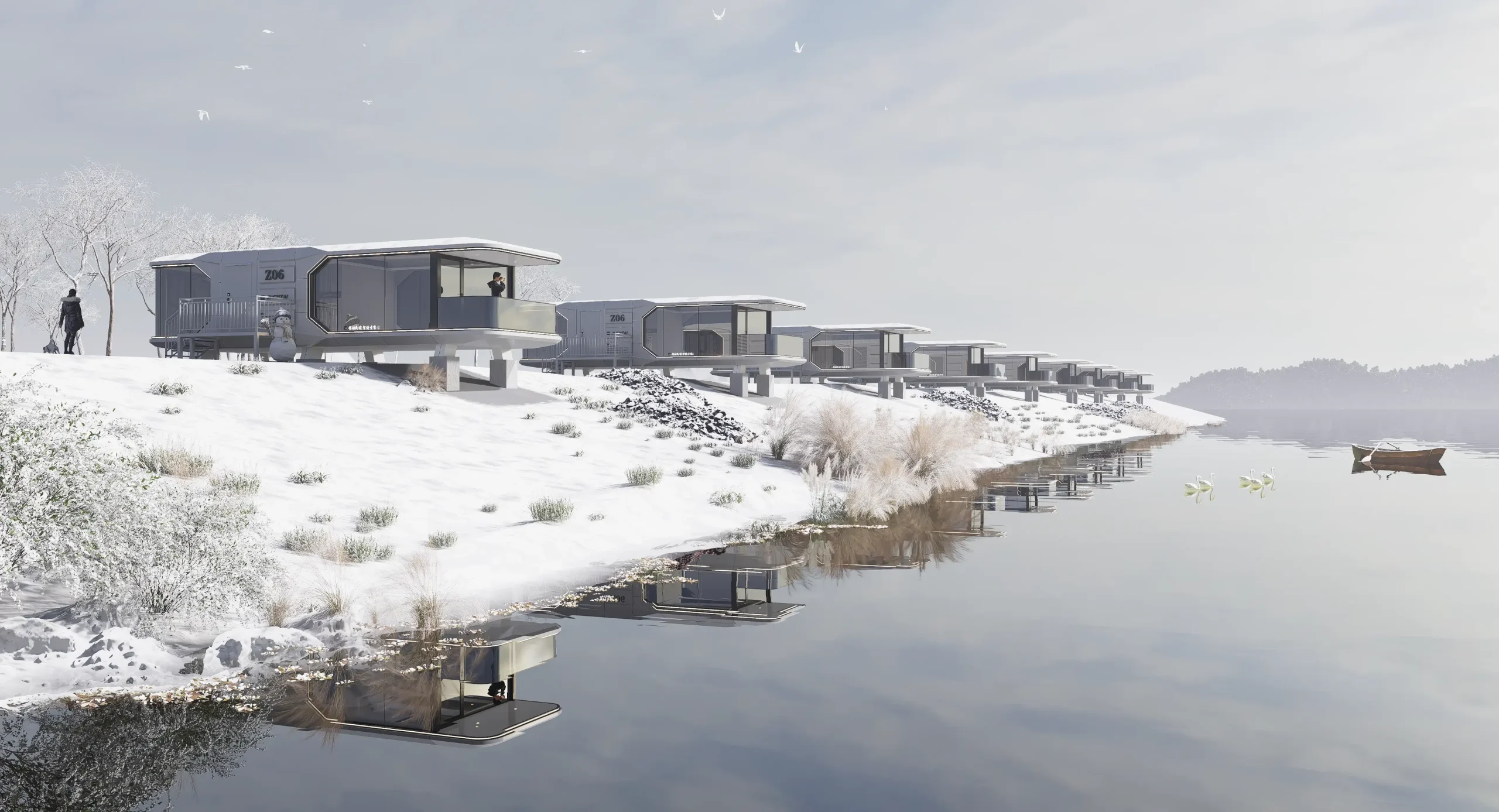
One of the most prominent advantages of modular buildings is their exceptional terrain adaptability. Unlike traditional buildings that require land leveling and foundation construction, modular structures can adopt pile foundations or elevated structures, causing almost no damage to the original terrain and vegetation.
Take the resort in Napa Valley, California, USA as an example. All guest rooms and owner’s cabins are modular units erected on pile foundations. The space underneath allows tree roots to grow freely and natural drainage systems to function properly, truly embodying the design concept of “touching the earth lightly”. The “Space Capsule” series produced by JS-HOUSES also demonstrates this advantage. These movable buildings can be flexibly applied to tourism land, non-agricultural land and other scenarios, especially suitable for rural and scenic area development, effectively solving the strict restrictions of traditional homestays on construction land.
2. Rapid Construction to Seize Market Opportunities
For investors in cultural tourism projects, time equals competitiveness. Adopting a factory prefabrication and on-site assembly model, modular buildings can shorten the construction period to 1/3 or even less of that of traditional buildings.
A project of 92 fully furnished vacation homes in Malaysia was completed in only 6 months from contract signing to delivery, with on-site assembly taking just 11 days and requiring 6 workers. A space capsule base in Central Asia completed the production and installation of 50 space capsules in 45 days, while a civil construction project of the same scale would take at least 6 months. This speed advantage allows investors to open before the peak tourist season and achieve quick capital recovery.
3. Energy Conservation and Environmental Protection Aligning with Sustainable Development Trends
Against the global “dual carbon” goal, the environmental features of modular buildings have become a key selling point.
- Factory production reduces construction waste by 90%, and the overall material recycling rate of modular buildings exceeds 90%.
- Excellent air tightness and thermal insulation performance greatly reduce operating energy consumption. The annual energy consumption of JS-HOUSES modular residences is only 40–70 kWh/m², far lower than that of traditional buildings.
Of greater note is the exploration of zero-carbon and even carbon-negative buildings. The movable modular buildings developed by the JS-HOUSES team achieved 100% energy self-sufficiency in pilot projects, with an annual carbon negativity of 114.5 kgCO₂, and carbon emissions reduced by 40% compared with traditional buildings.
4. Flexible Design to Meet Personalized Needs
Modular buildings are not identical “matchboxes”; on the contrary, they support highly customized designs.
- Tree houses draw inspiration from biological structures such as bird nests and silkworm cocoons, forming non-standard flowing organic curves, with 270° panoramic floor-to-ceilings windows bringing forest and coastal views indoors.
- A resort on an island in Southeast Asia adopts the organic forms of shells and palm leaves as its design language, optimizing form and function through parametric design while minimizing environmental impact.
Abundant material and finish options enable modular buildings to adapt to various styles from modern minimalism to rural nature, helping investors create distinctive leisure spaces.
III. Typical Application Scenarios
1. Luxury Glamping Sites
Luxury glamping is one of the most important application areas for modular buildings. Equipped with high-end facilities such as luxury spas, saunas, steam rooms, swimming pools and clubs, they provide an ideal choice for travelers pursuing natural experiences without sacrificing comfort.
2. Mountain and Lakeside Resorts
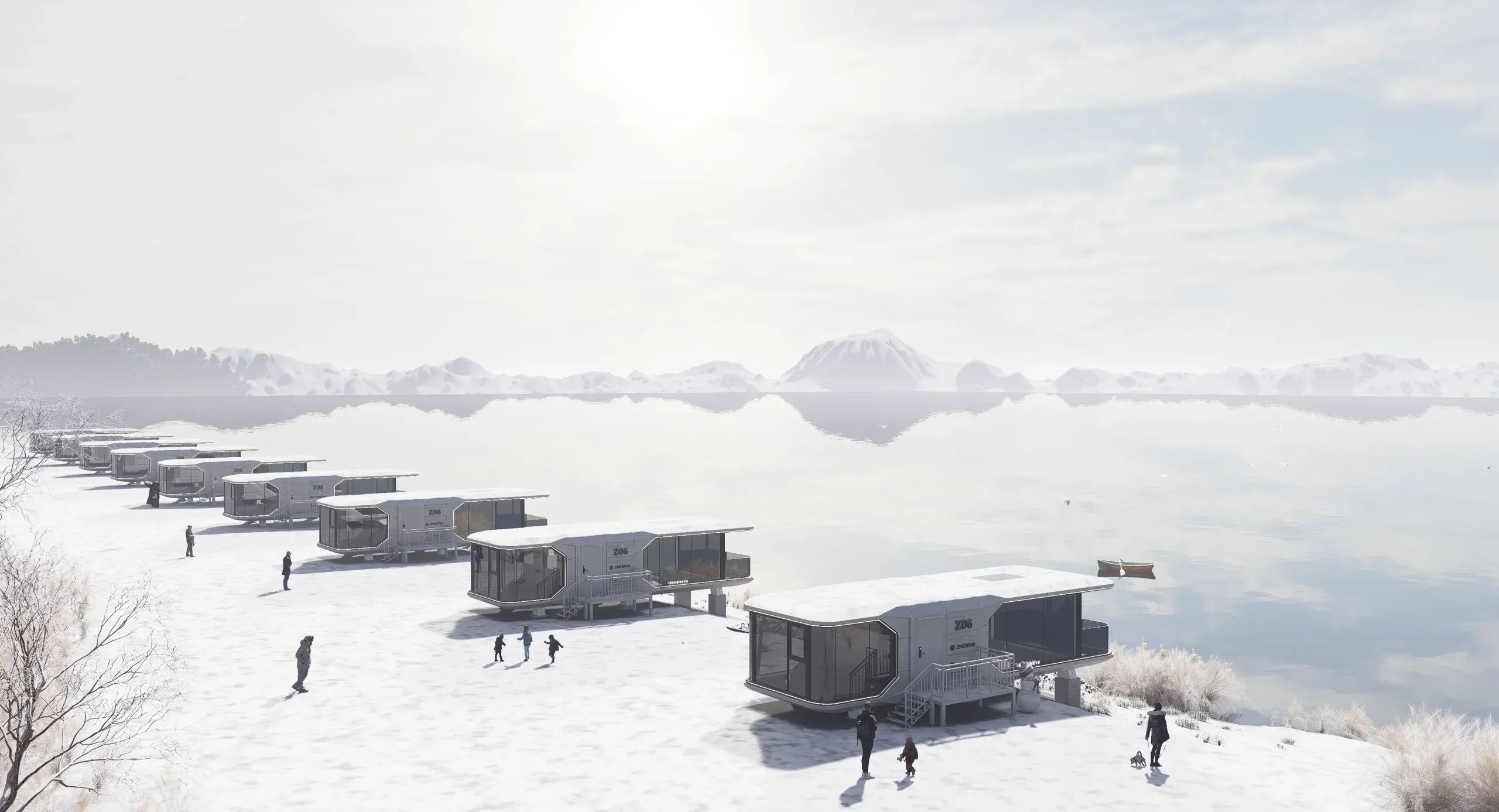
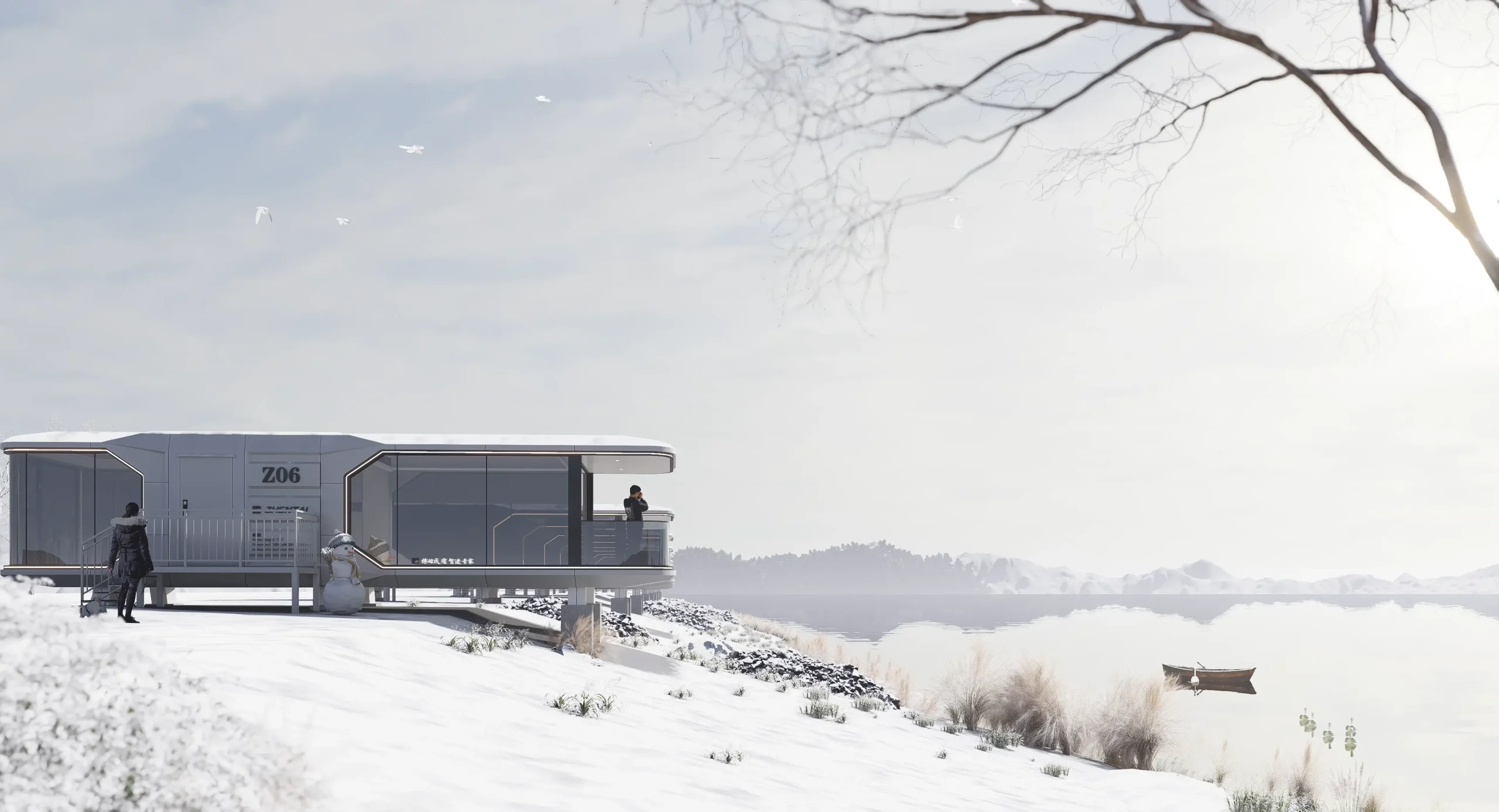
Modular buildings show irreplaceable advantages in areas where traditional construction is difficult, such as forests, lakesides and mountains. JS-HOUSES products have been applied to projects including Astana in Kazakhstan, the Charvak Lakeside Resort in Uzbekistan, and the Issyk-Kul Lakeside Hotel in Kyrgyzstan.
3. Cultural Tourism Complexes and Rural Revitalization
Modular buildings also have great potential in cultural tourism complexes and rural revitalization. The modular stations developed integrate guest rooms, cafes, dining areas, supermarkets and parking lots, serving as important supply points for self-driving enthusiasts.
IV. Market Prospects and Development Trends
1. Market Growth Driven by Eco-Tourism Demand
With rising health awareness and environmental protection concepts, eco-tourism has become one of the fastest-growing segments in global tourism. Travelers increasingly seek immersive natural experiences while expecting modern and comfortable accommodation.
Modular buildings precisely meet this seemingly contradictory demand—they integrate into the natural environment with minimal intervention while providing hotel-grade living quality. The rapid growth of the U.S. luxury glamping market has confirmed this trend.
2. Deep Integration of Intelligence and Green Development
Future modular buildings will be more than just “houses”; they will become “intelligent architectural entities” integrating smart home systems, environmental control, structural health monitoring and social entertainment.
JS-HOUSES products have integrated AI large models, allowing buildings to automatically adjust lighting and air quality, monitor structural safety and issue maintenance alerts, acting as an interactive “space butler”. Meanwhile, zero-carbon and carbon-negative buildings will move from concept to large-scale application.
3. Accelerated Expansion into Overseas Markets
Chinese-made modular buildings are accelerating their “go global” pace. JS-HOUSES has established a subsidiary in Uzbekistan, a joint venture factory in Thailand, and secured general agents in the United States and distributors in Japan. Its products are exported to Japan, Southeast Asia, Mexico and other regions. With the recovery of the global tourism market and the enhanced competitiveness of China’s intelligent manufacturing, exports of modular buildings are expected to achieve greater growth.
V. Conclusion
With their core advantages of terrain adaptability, rapid construction, energy conservation, environmental protection and flexible design, modular buildings are profoundly changing the construction mode and operation logic of the tourism and vacation industry. Their application scenarios continue to expand from luxury campsites to mountain resorts, and their market potential keeps unfolding.
Under the trend of deep integration of intelligence and green development, modular buildings will go beyond pure architectural functions to become poetic dwelling carriers connecting people and nature, technology and life. For investors, choosing modular buildings is not just a construction method, but a strategic path of harmonious coexistence with nature, synchronization with market changes and alignment with future trends.