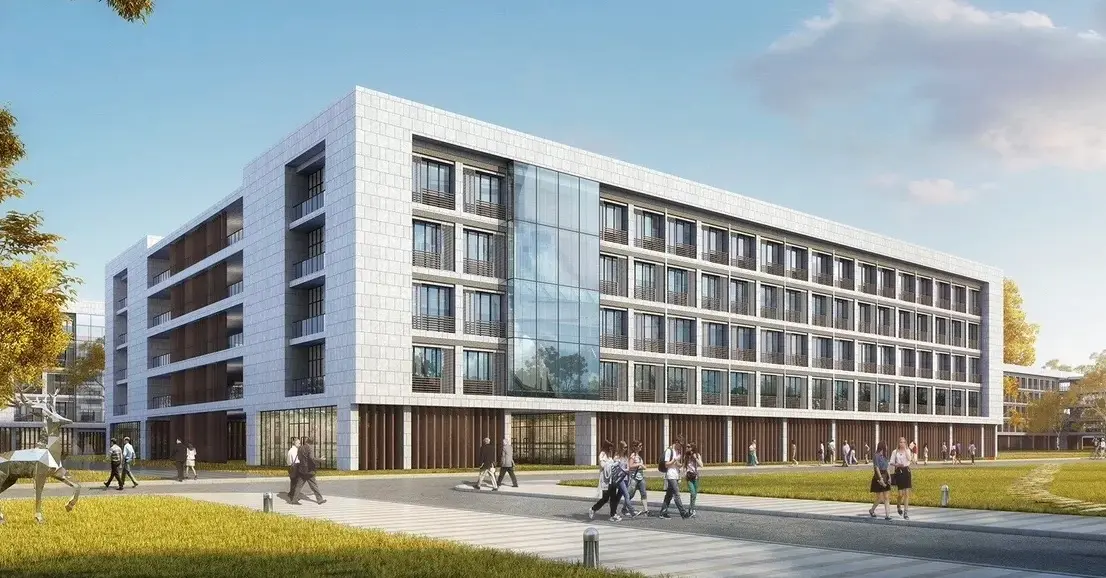
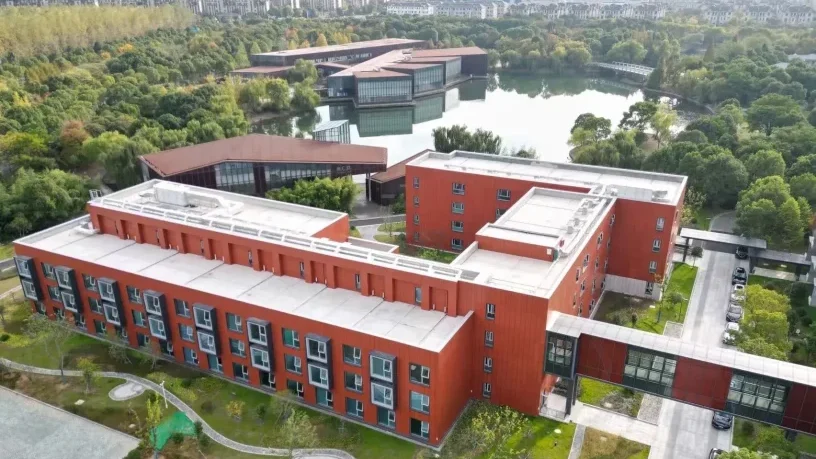
Modular schools: a modern, fast and cost-effective solution for education
Against the backdrop of growing demand for flexible educational spaces, modular schools are becoming an increasingly popular solution. These are buildings assembled from ready-made block containers manufactured in factory conditions. This approach makes it possible to quickly erect educational facilities that meet all modern standards of safety, comfort, and energy efficiency.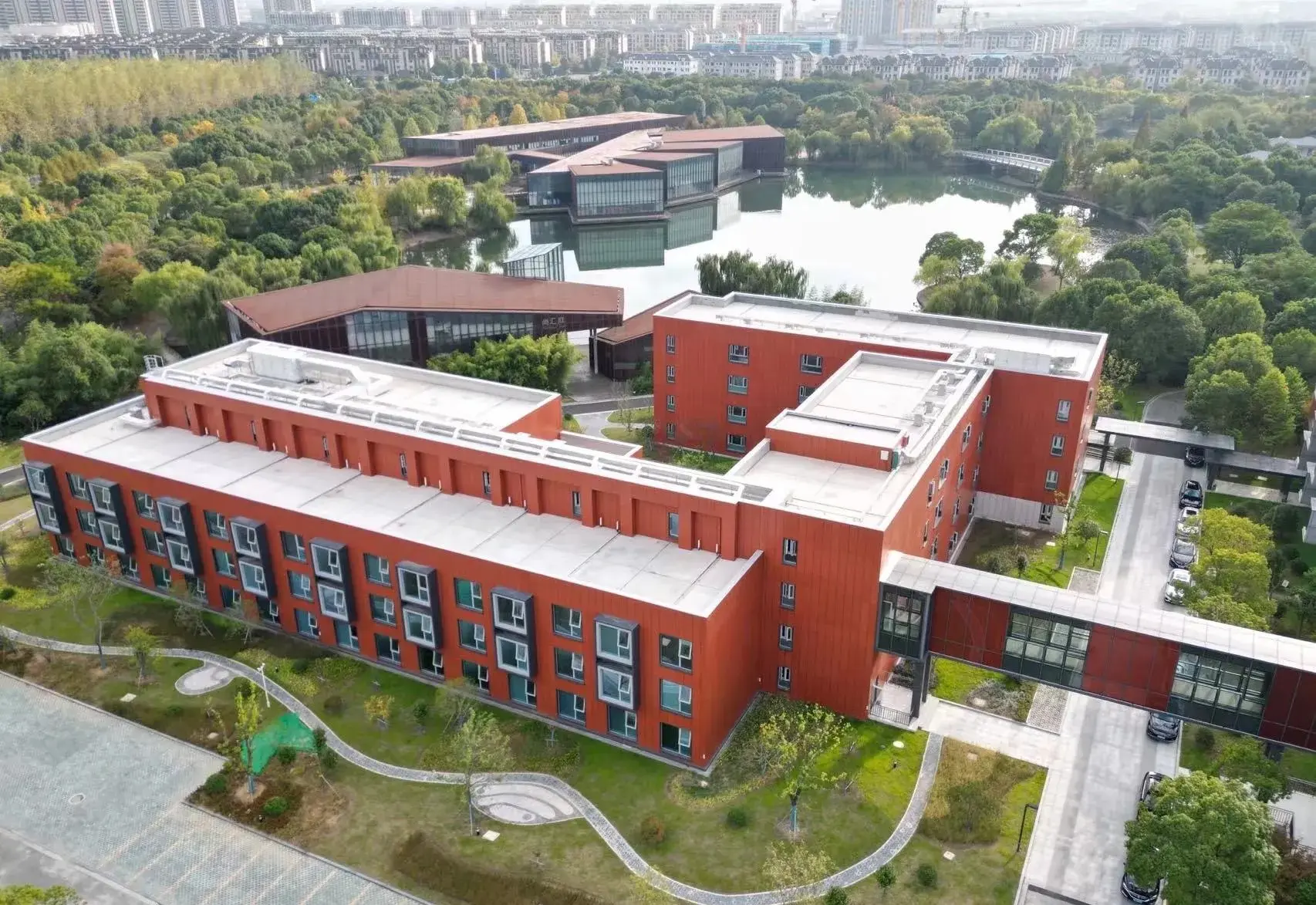
Key Features of Modular Schools
Modern modular educational institutions are designed with strict requirements in mind:
Safety – full compliance with fire safety and seismic resistance standards.
Comfort – use of high-quality materials and technologies that create a favorable learning environment.
Energy efficiency – insulated sandwich panels and energy-saving systems reduce operating costs.
Core Advantages
Modular schools offer a number of significant advantages over traditional construction:
Structural flexibility. Buildings can be easily adapted to any educational needs and expanded when student numbers change.
Fast construction. Modules are manufactured in the factory while site preparation takes place in parallel, dramatically shortening construction timelines.
Lower costs. Modular construction is more economical due to optimized production, logistics, and reduced on-site labor costs.
Eco-friendliness. Improved insulation, energy-saving lighting, and ventilation systems reduce the carbon footprint.
High quality. Factory control ensures compliance with strict standards at every stage of manufacturing.
Adaptability. Modular buildings can be easily upgraded to accommodate new technologies and teaching methods.
Types of Modular Schools by Size
Depending on the needs of the educational institution, you can choose the appropriate scale:
| Size | Capacity | Typical Rooms |
| Small | Up to 100 students | Several classrooms, administrative rooms, basic sanitary facilities |
| Medium | 100–500 students | specialized classrooms, library, computer lab, gymnasium |
| Large | More than 500 students | Laboratories, music and art rooms, cafeteria, medical station |
Construction costs naturally increase with size, but modular schools remain more economical than traditional ones in any case.
Construction stages
The process of constructing a modular school includes the following key steps:
Land acquisition — needs analysis, evaluation, and purchase of land.
Design — development of an architectural plan in accordance with educational standards and obtaining permits.
Module manufacturing — production of block containers at the factory with quality control.
Transportation — delivery of finished modules to the site.
Assembly — site preparation and assembly of blocks into a single structure.
Utility connection — water supply, sewerage, electricity, heating.
Finishing work — interior and exterior finishing, landscaping.
Commissioning — final inspection and opening of the school.
Types of Block Containers Used for Schools
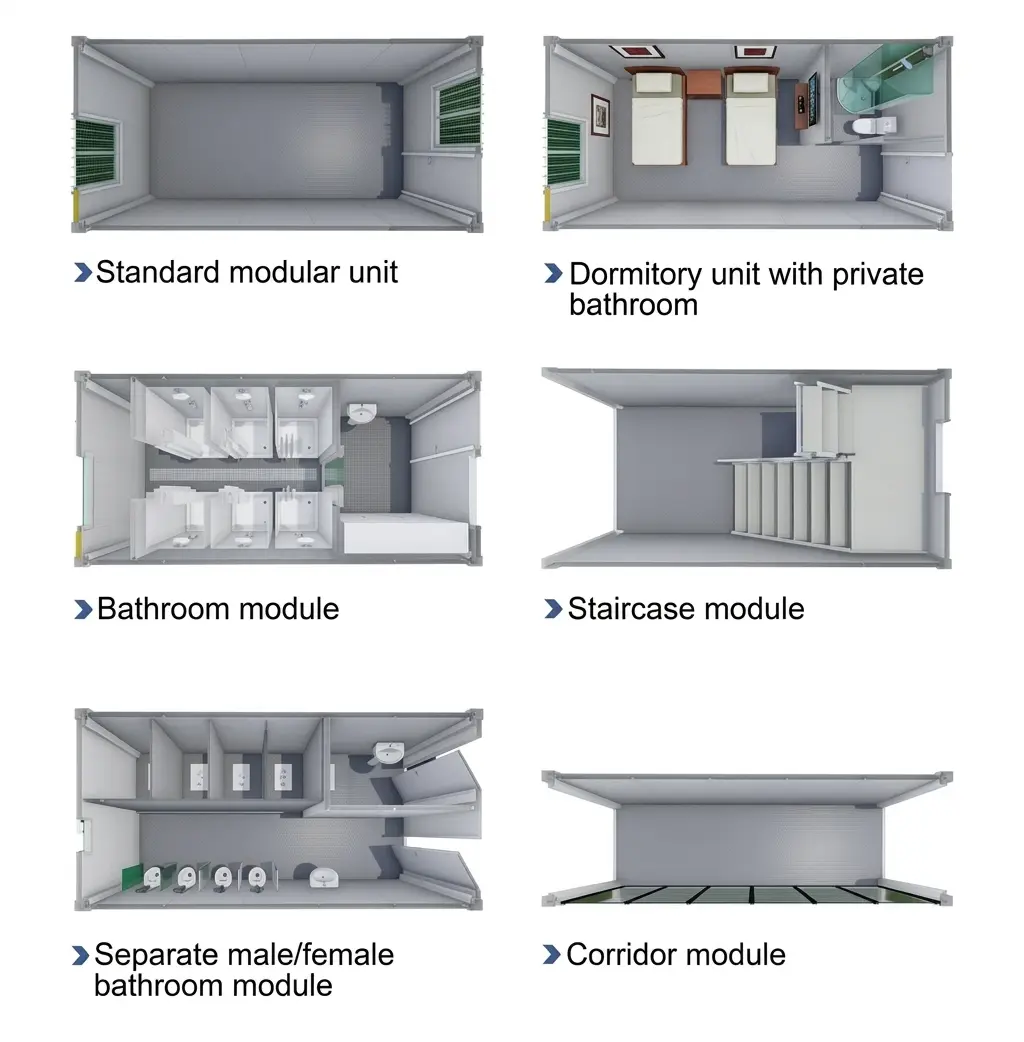
Different functional zones use specialized types of block containers:
Standard — classrooms, offices, restrooms.
Specialized — laboratories, libraries, gyms.
Convertible containers — can change shape for different tasks.
Energy-efficient — equipped with solar panels and enhanced insulation.
Premium finish — for administrative areas.
Sanitary containers — modular toilets, showers (e.g., for swimming pools).
Medical containers — for first aid.
Mobile guardhouses — with video surveillance systems for access control.
This variety makes it possible to create a complete school infrastructure on a turnkey basis.
How Much Does It Cost to Build a Modular School?
There is no fixed answer to this question, as the cost depends on many factors:
the size of the school (number of students);
the complexity of architectural solutions;
the materials and engineering equipment used;
regional conditions (logistics, site preparation, local prices).
To obtain an accurate figure, detailed design and an individual budget estimate are required. However, the key advantage of modular construction remains unchanged: it is significantly more economical than traditional construction, while providing comparable or even higher levels of quality, safety, and comfort.
Conclusion
Modular schools are not a temporary solution, but a complete, modern, and promising alternative to capital construction. They allow for a rapid response to demographic changes, community needs, and new educational standards, while providing an optimal balance of price, quality, and construction speed.
If you need to build a school on a tight schedule and a limited budget, modular technologies are the most sensible choice.