
Modular Container Houses: Redefining Efficient Construction for Modern Spaces
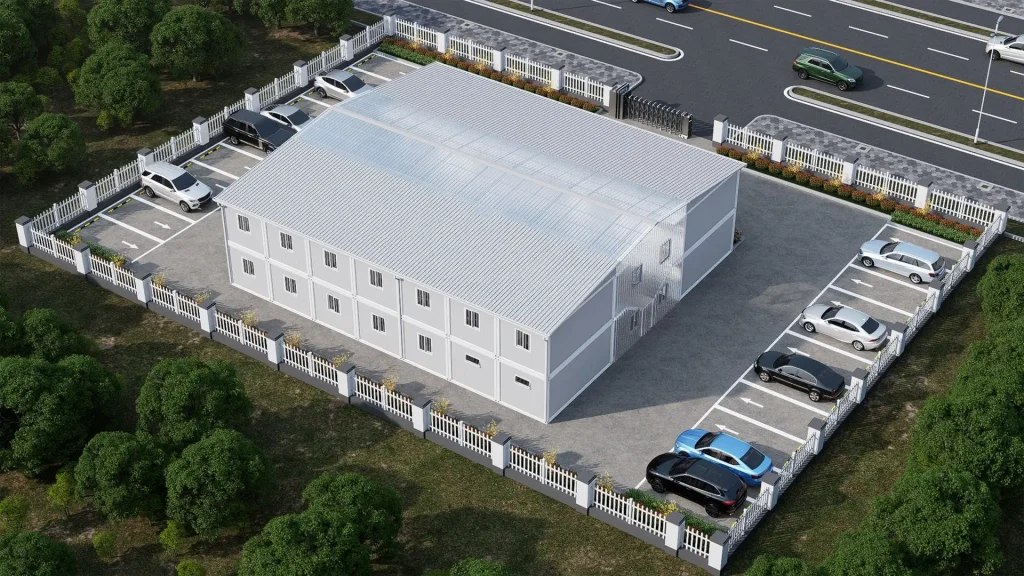
As the construction industry pursues more efficient, flexible, and sustainable solutions, modular container houses are gradually evolving from a temporary alternative into a key component of modern building systems. From construction site offices to permanent residences, from school classrooms to mobile clinics, these prefabricated units rooted in the
standard container concept are reshaping the world’s vision of space construction.
What Are Modular Container Houses?
Modular container houses are not traditional shipping containers. They are standardized prefabricated units designed specifically for modular construction. Unlike ordinary containers, they feature a light steel frame structure with high-insulation sandwich panel walls. Structural framing, insulation, electrical and plumbing systems, and interior finishes are fully prefabricated in the factory. They are delivered to the site as flat packs or finished units, then quickly assembled, stacked, and combined to form fully functional building spaces.
These products integrate industrial precision with architectural flexibility. Standard single-module dimensions start at 3×6m and 3×7m, with maximum expandable units reaching 4×12m. According to technical specifications from manufacturers such as JS-HOUSES, modular containers can achieve a wall thermal transmittance coefficient as low as 0.26 W/(m²·K) and a roof coefficient of 0.68 W/(m²·K). They can withstand snow loads of 80 kg/m² and wind speeds of 102 km/h, combining excellent thermal performance and structural strength.
Essential Differences from Traditional Containers
Many people confuse modular container houses with converted used shipping containers. While they share a similar exterior form, they are fundamentally different:
Dimension | Converted Used Containers | Professional Modular Containers |
Structural Design | Retrofitted transport vessels with major limitations | Purpose-designed for construction with optimized structures |
Thermal Insulation | Retrofit insulation required, prone to thermal bridging | Built-in continuous insulation system with controllable performance |
MEP Pre-installation | On-site trenching and piping, cumbersome construction | Factory pre-wired/plumbed with standard plug-and-play connections |
Transportation | Full-unit shipping with low space utilization | Flat-packable, stackable for high-density multi-unit transport |
Customization | Highly restricted by original container structure | Fully customizable in size, layout, and finishes |
As emphasized in JS-HOUSES’s product documentation, modular containers use galvanized cold-rolled steel frames and weldless assembly. Walls and roofs use high-density EPS or rock wool sandwich panels, and floors feature fiber cement boards topped with weather-resistant vinyl. These materials and processes are chosen for building performance, not transport functionality.
Key Technologies & Manufacturing Features
1. Weldless Assembly System
Modern modular containers widely use bolt-nut or plug-in connections. Primary load-bearing steel members are heavily galvanized. No on-site welding is needed, eliminating corrosion risks at weld points. This technology improves structural durability and allows repeated disassembly, relocation, and reconfiguration.
2. Flat-Pack Shipping & Efficient Logistics
A major advantage is transport efficiency. One 40-foot high-cube container can ship up to 10 flat-packed 2.4×6m modular units. After delivery, a trained team can assemble one unit in approximately one hour. This logistics model is ideal for remote areas, restricted-access sites, and greatly reduces long-haul shipping costs.
3. Highly Integrated MEP Systems
Premium modular containers come pre-installed with complete electrical systems: distribution boxes, lighting, sockets, switches, and certified cabling (such as NYM cables). Outdoor fixtures have an IP44 protection rating. Optional integrations include HVAC, water supply/drainage, bathroom fixtures, and low-voltage systems for turnkey delivery.
Diverse Product Types
Modular containers are not a single product but a system for multiple scenarios. Per JS-HOUSES’s product line, common types include:
- Flat-pack containers: Delivered compactly for fast on-site assembly, ideal for high-efficiency transport projects.
- Detachable containers: Designed for repeated assembly and disassembly, suitable for temporary or relocatable use.
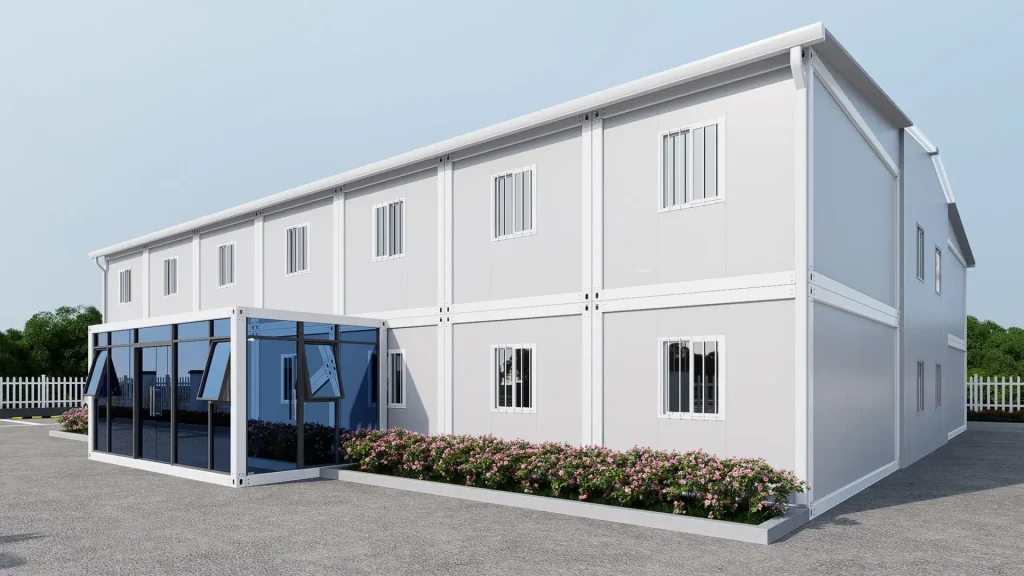
- Container offices: Equipped with electrics, lighting, and insulation; usable standalone or stacked into multi-story complexes.
- Container residences: Finished for residential use, for single-family homes or multi-unit communities.
- Sanitary containers: Integrated toilets, showers, septic or waste collection systems for construction sites or emergency shelters.
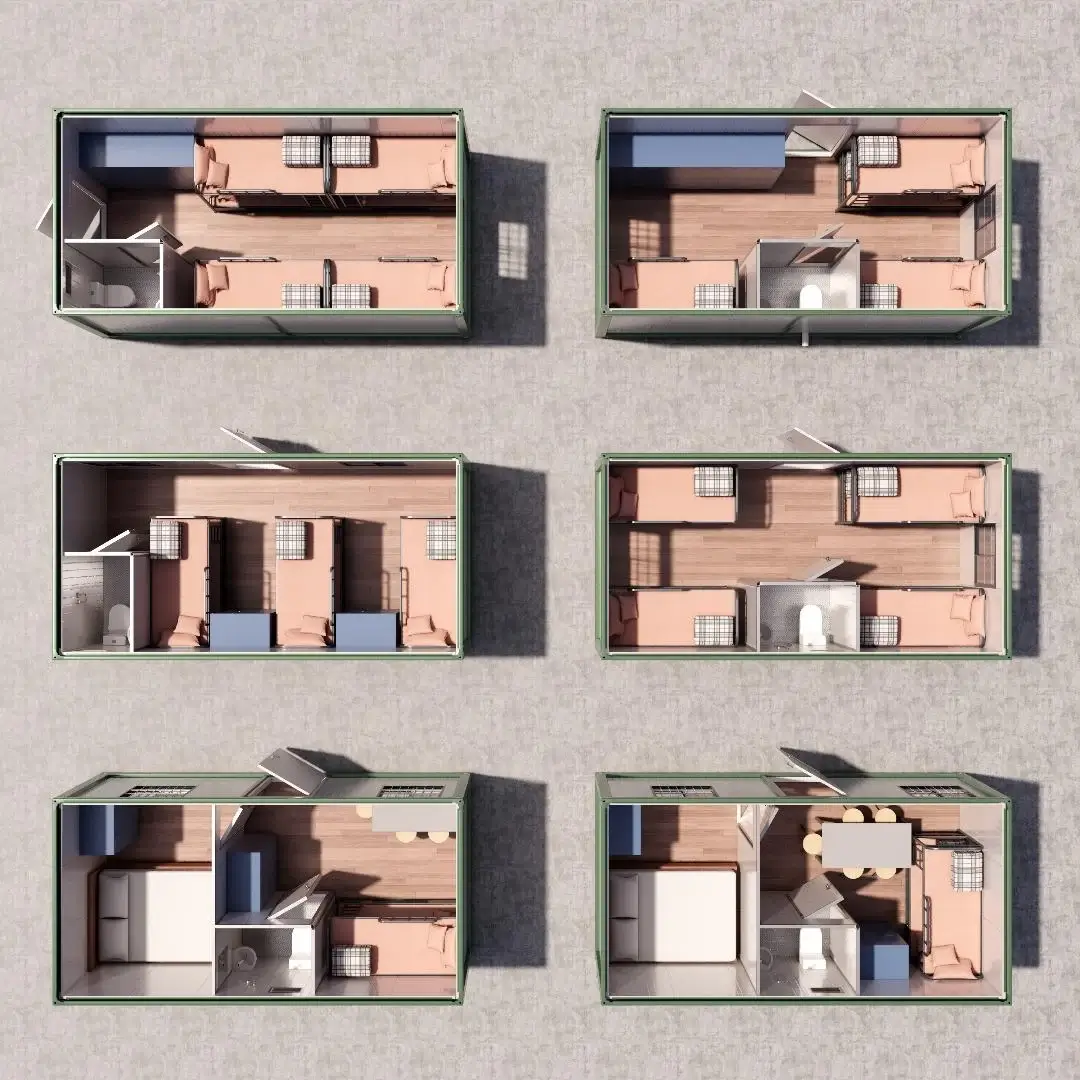
- Dormitory containers: Multi-bed layouts for staff quarters, student dorms, and collective housing.
- Storage containers: Secure storage for tools, equipment, and materials.
Wide-Ranging Industry Applications
Modular containers have expanded far beyond traditional temporary site buildings:
- Construction & Engineering: Site offices, manager quarters, cafeterias, meeting rooms, guard shacks. Modular camps are standard for large infrastructure (roads, railways, power stations, mines).
- Education & Healthcare: Temporary or permanent classrooms, labs, clinics, mobile medical stations. Ideal for rapid capacity expansion during enrollment fluctuations or facility upgrades.
- Commercial & Retail: Sales centers, kiosks, pop-up stores, F&B facilities. Popular for brands needing quick deployment or seasonal operation due to relocatibility and refurbishability.
- Residential & Community: Private homes, boutique homestays, affordable housing, post-disaster shelters. Excellent for land-flexible or fast-delivery scenarios.
- Special Use: Mining camps, oilfield bases, military facilities, border outposts, emergency isolation units. These demand superior transport ease, speed, and mobility.
Core Advantages: Why Choose Modular Containers?
1. Time Efficiency
Reduce construction time by up to 75% compared to traditional methods. Factory prefabrication runs parallel to on-site foundation work. Modules only require hoisting, connection, and finishing, enabling occupancy within days.
2. Cost Control
Industrial production ensures precise material use and low waste, drastically cutting labor costs. For fast-occupancy or short-term projects, modular containers shorten capital occupancy and improve ROI.
3. Flexibility & Scalability
Units can be horizontally combined or vertically stacked into single-unit to multi-story structures. When needs change, units can be relocated, added, or removed—avoiding the “fixed and inflexible” limitation of conventional buildings.
4. Stable Quality
Structural, finishing, and MEP work are completed in a controlled factory environment, free from weather, labor skill, and on-site coordination issues. Quality assurance is stricter, and output consistency is higher.
5. Eco-Friendliness & Energy Efficiency
Wall insulation outperforms ordinary brick-concrete or block structures. Factory production cuts material waste and on-site pollution. Units are reusable and relocatable, greatly extending the lifecycle of building materials.
Conclusion
Modular container houses are not a simple replacement for traditional construction, but a complement and extension. They offer irreplaceable advantages in time-sensitive, space-flexible, transport-restricted, and reusable scenarios. As manufacturing and design standards improve, these products are moving beyond “temporary buildings” and increasingly entering the permanent construction sector.
For decision-makers, the true value of modular containers lies in this: they do not “downgrade” architecture to a product, but “upgrade” it into a controllable, movable, and recyclable industrial manufactured good. For projects requiring faster, more flexible, and more predictable construction, modular containers provide a proven, reliable solution adopted worldwide.