
Thermal Insulation Performance of Capsule Guesthouses
I. Design Principles of Thermal Insulation for Capsule Guesthouses
The thermal insulation of capsule guesthouses mainly relies on three core technologies:
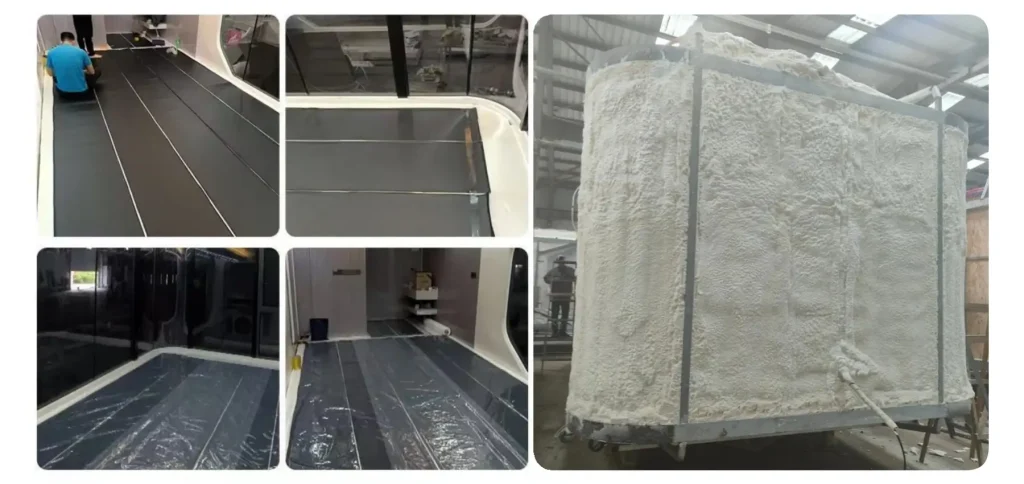
- Material Selection: The cabin body is mostly made of aviation-grade aluminum alloy or composite materials, with interlayers filled with polyurethane foam (thermal conductivity ≤ 0.022 W/(m·K)), which is close to the insulation standard of household refrigerators.
- Air-Tight Structure: Doors and windows adopt double-layer insulated glass (heat transfer coefficient 1.1-1.5 W/(㎡·K)) combined with silicone sealing strips, resulting in an air leakage rate of < 5% (referring to GB/T 7106-2008 Standard for Air Permeability of Building External Windows).
Active Temperature Control: Most cabins are equipped with inverter air conditioning + underfloor heating systems, reducing energy consumption by 30%-40% compared to traditional buildings (data source: 2022 Modular Building Energy Conservation White Paper).
II. Measured Performance: Data Comparison in Extreme Environments
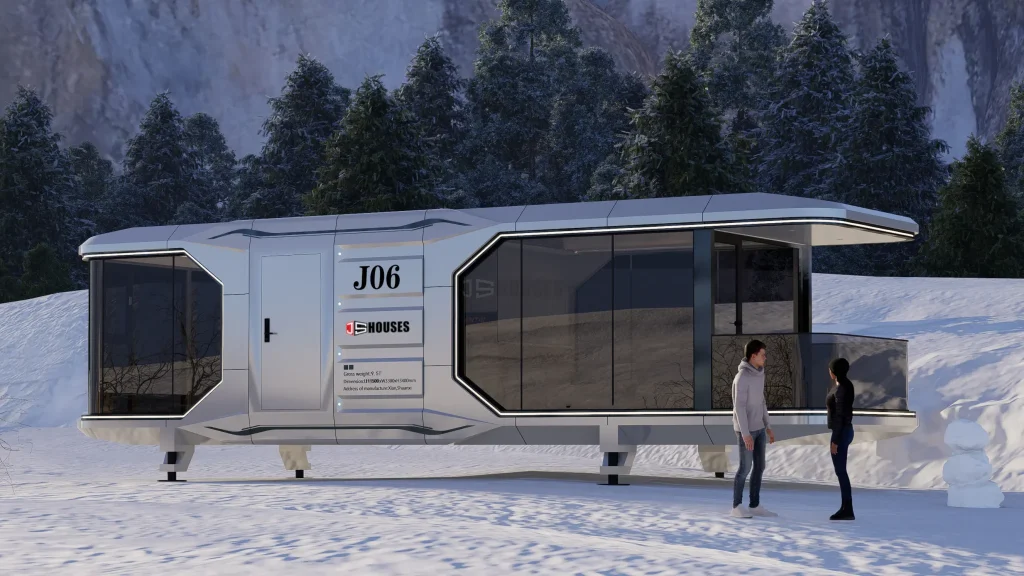
According to the test report of JS-HOUSES capsule (Model J06):
· Winter (-10℃ ambient temperature): Relying solely on basic insulation, the internal temperature can be maintained above 8℃; after turning on the underfloor heating, it rises to 20℃ within 20 minutes.
· Summer (40℃ ambient temperature): With sunshade curtains + air conditioning in operation, the temperature difference between inside and outside the cabin reaches 15℃, and the energy consumption is about 1.2 kWh/h (equivalent to a 1.5-ton air conditioner).
Note: The above data are the average measured values by SGS, a third-party testing institution, across 6 climate zones including plateaus and coastal areas.
III. Common User Issues and Optimization Solutions
1. Condensation Problem: Cabins in cold regions are prone to condensation. It is recommended to choose models with anti-condensation coatings (e.g., “Aurora Pro” series), which increases the cost by about 8% but reduces the condensation rate by 90%.
2. Energy Consumption Disputes: Some users report high electricity bills, which are actually related to usage habits. For example: Frequent opening and closing of cabin doors increases heat loss by 47%.
IV. Future Trend: Intelligent Thermal Insulation Technology
· The newly launched “AI Constant Temperature Cabin” in 2024 has achieved:
Automatic temperature adjustment via infrared sensing, reducing energy consumption by an additional 25%.
· Optional solar photovoltaic panels, meeting 50% of daily electricity needs (requiring more than 4 hours of average daily sunlight).
Conclusion: The thermal insulation performance of capsule guesthouses has met livable standards, but configurations should be selected based on regional climates. Users in northern regions should prioritize thicker cabin bodies and underfloor heating, while those in southern regions need to enhance heat insulation.