
How Long Do Modular, Prefab & Container Homes Last? Service Life Guide for Buyers
Modular homes (also known as prefabricated or factory-built homes) are manufactured in climate-controlled factory settings and assembled on-site in a matter of days. With advantages such as short construction timelines, consistent quality control, and energy efficiency, they are becoming a genuine alternative to traditional housing.
🔍 However, the most critical question for potential homeowners remains: how long will such a home actually last, and can it be considered a long-term, permanent residence?
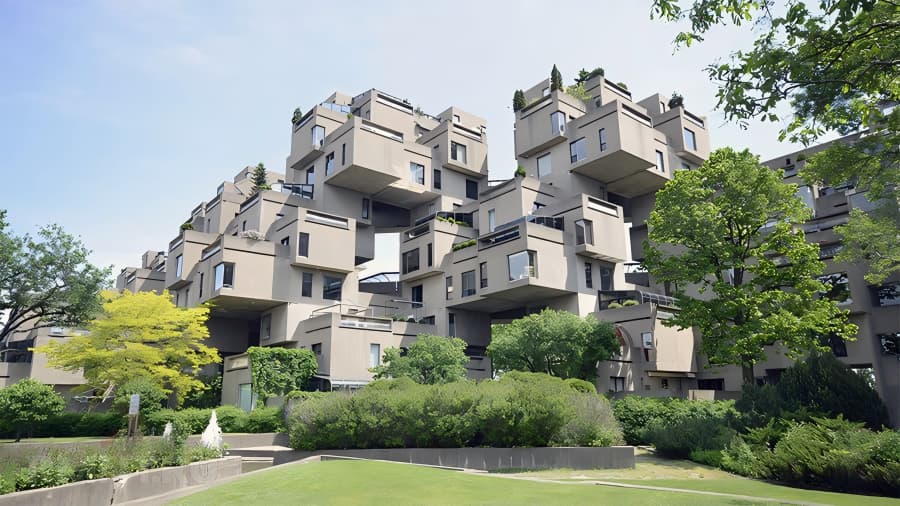
1. Actual Service Life by Material Type
The longevity of a modular home depends heavily on its structural material. Below are the typical service life ranges for common modular construction types:
* Horizontal bar indicates maximum expected service life relative to 100 years. Actual longevity depends on maintenance & environment.
It is important to note that the manufacturer's warranty (typically 15–25 years) only covers hidden defects in materials and workmanship under normal use—it is not the home's ultimate lifespan. In many European countries and Japan, modular homes housing built in the 1980s are still in active use and good condition, with actual service lives exceeding 60 years.
2. Seven Critical Factors That Determine Longevity
1. Foundation Reliability
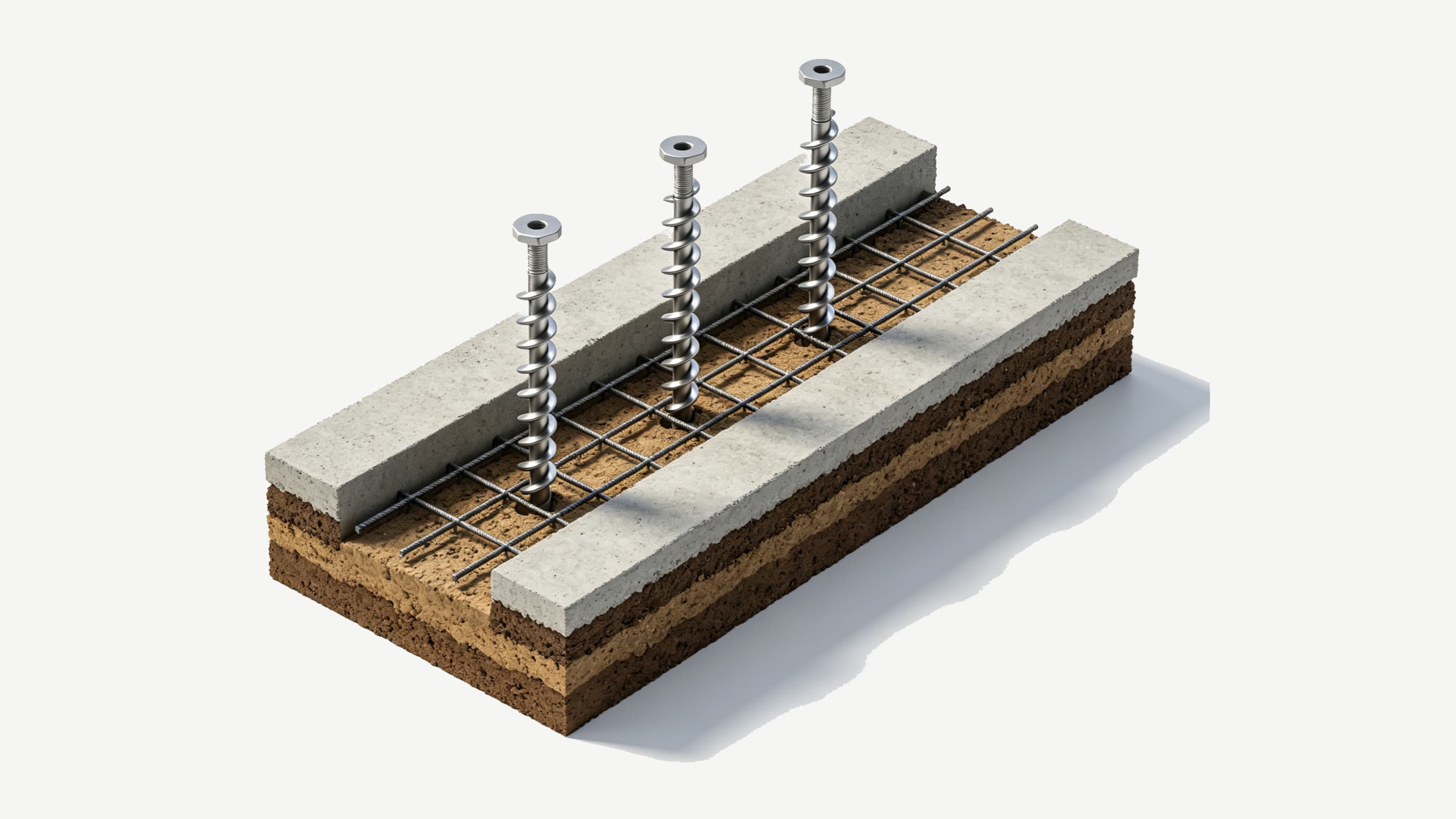
Even a perfectly manufactured module will begin to show signs of distress within 5–10 years if placed on a poor foundation. Recommended: helical (screw) piles or reinforced concrete strip footings. When engineered correctly, they provide 50+ years of stable support.
2. Climate and Environmental Exposure
High-humidity regions: Accelerated corrosion. Freezing climates: freeze-thaw cycles. Hot, high-UV regions: rapid degradation of paints and membranes. Solution: select materials for your specific climate zone.
3. Factory Manufacturing Precision
ISO 9001 certification and millimeter-level tolerances guarantee even joint gaps and continuous insulation.
4. Waterproofing and Airtightness System Integrity
Multi-layer protection: EPDM gaskets + pre-compressed sealant tapes + waterproof membranes prevent water infiltration that leads to corrosion and insulation damage.
5. Condensation Control (Vapor Barrier Design)
In cold climates: continuous vapor retarder + ventilated air gap prevents hidden mold and material degradation.
6. Roofing System Durability
Metal roofing: 30–50 yrs, Asphalt shingles: 20–30 yrs, Single-ply membranes: 25–35 yrs.
7. Ventilation Effectiveness
Proper soffit/ridge vents or ERV/HRV remove excess moisture. Poor ventilation causes mold within 10–15 years.
🌍 8. Central Asia Specifics: What Local Buyers Must Know
Temperature extremes (-40°C to +45°C): Choose low-temperature toughness steel (Q355D). Use silicone-based low-temperature sealants.
Wind-blown dust & sand: High IP ratings for electrical enclosures, abrasion-resistant paint, airtightness Class 8 (EN 12207).
Remote site logistics: Helical piles avoid concrete curing issues in freezing weather.
Corrosion is less severe than coastal areas, but condensation is the real enemy: Continuous vapor barrier + ventilation gap is non-negotiable.
3. Common Myths vs. Facts
❌ Myth
"Modular home last only 30 years max."
➕ "You can install it and forget about it."
➕ "Modular home are less durable than brick or block construction."
➕ "The joints between modules are the weak point."
✅ Fact
Premium steel or concrete house modular home can achieve 70+ years of service life.
Regular inspections of joints, roofing, foundation and ventilation are required. Neglect dramatically shortens lifespan.
With equal maintenance, a high-quality modular home is as durable as traditional steel-frame or concrete construction.
Modern connections (bolting + welding + sealants + membranes) provide monolithic integrity, matching seismic/wind load requirements (e.g., Kazakhstan SNiP or Uzbek KMK).
4. Maintenance Plan to Maximize Service Life
| Frequency | Task | Specific Actions |
|---|---|---|
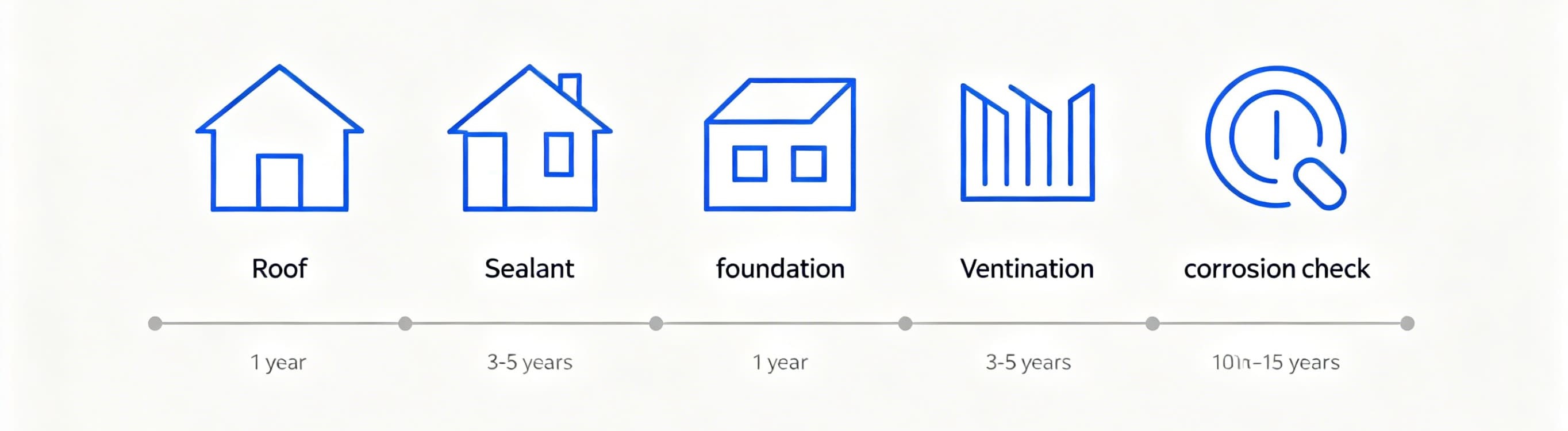
| Annually (seasonal) | Roof & drainage Joint seals Foundation & site drainage Ventilation | Clean gutters; inspect shingles/panels. Inspect sealant gaskets; replace if cracked. Ensure water drains away; check settlement cracks. Check soffit vents, ERV/HRV filters. |
| Every 3–5 years | Corrosion protection Exterior coating maintenance | Inspect steel connections, anchor bolts; touch up anti-corrosion paint. Wash exterior; repair localized coating damage. |
| Every 10–15 years | Roof renewal Windows & doors Insulation & vapor barrier inspection | Partial or full roof replacement. Replace if airtightness degrades, condensation excessive. Thermal imaging to detect wet insulation; local repairs. |
With no active maintenance, problems typically appear within 15–20 years. Systematic maintenance can extend service life by 2–3 times.
5. Design Service Life vs. Actual Service Life
🏷️ Design Service Life
The period during which the structure is expected to remain safe and functional under normal use and regular maintenance, without major repairs.
Economy class: 20–30 yrs | Comfort class: 40–60 yrs | Premium class: 70–100 yrs
⚙️ Actual Service Life
Depends on owner's maintenance practices and local conditions. A 50-year design life home, in mild climate with regular inspections, can easily last 70+ years. Neglect may cause serious issues within 20 years.
6. Practical Recommendations for Potential Owners
- Choose a reputable manufacturer – Request third-party durability test reports & warranty terms.
- Do not compromise on the foundation – Foundation is ~10-15% of total cost but determines >60% of long-term stability.
- Match materials to your climate – Coastal: enhanced corrosion protection (zinc ≥85μm). Cold: continuous vapor barrier. Hot: reflective roof coatings.
- Keep a maintenance log – Record every inspection, repair, and replacement.
- Set realistic expectations – Modular homes can be fully comparable to traditional concrete/steel homes with proper care.
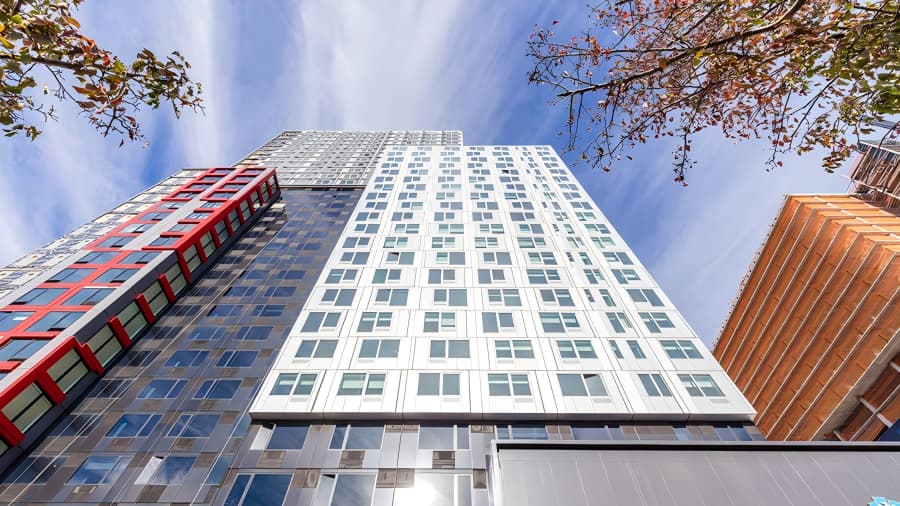
A modular home is not a "temporary structure." Depending on materials and maintenance, it can serve from 30 years (entry-level) to 100 years (premium permanent residence). By selecting the right structural type, building a proper foundation, and committing to regular upkeep, a modular housing can provide safe, comfortable housing for decades — and in many cases, for a lifetime.
❓ FAQ – Modular & Container Home Longevity
Ready to invest in a modular, prefab, or container home that lasts 50+ years?
Browse our standard floor plans, or click Get A Quote → above based on your region's climate and site conditions.