
Why Do Project Managers Often Underestimate Modular Building Transportation?
A Practical Look at Dimensions, Routes, Loading, Delivery and Site Installation
When a modular building project is first discussed, transportation often sounds like the easiest part.
The building has been designed. The modules are manufactured in a factory. A truck picks them up, drives to the project site, and a crane puts them into position.
Simple, right?
Not always.
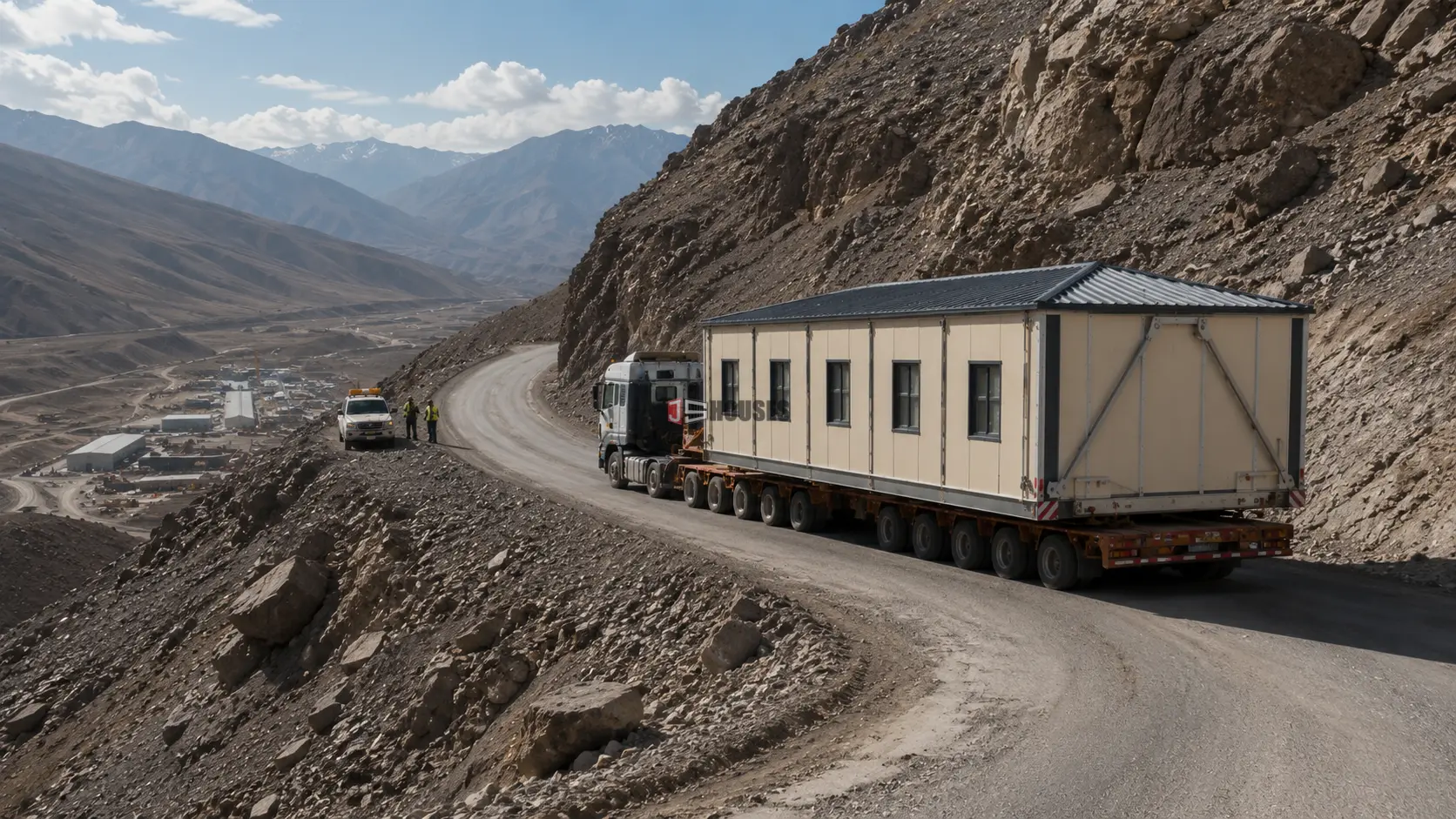
Many project managers only discover the complexity of modular building transportation when the first delivery is already being prepared. A road may be too narrow. A sharp turn may be difficult for a long trailer. A bridge may have a weight restriction. The site entrance may not provide enough space for unloading. Even after the truck reaches the destination, there may be nowhere suitable to position the crane.
This is why experienced project managers treat transportation as part of the building process rather than a final delivery step.
For modular homes, prefab homes, worker accommodation, and large modular camps, transportability can influence the project long before the first module leaves the factory.
1. Transportation Starts Before Manufacturing
One of the easiest mistakes to make is thinking about transportation only after the building has already been designed.
By then, many important decisions have already been made.
The size of the module determines what kind of vehicle can carry it. The weight affects loading equipment and road requirements. The overall dimensions may determine whether a particular route is even possible.
This means transport planning should begin at the same time as building design.
For a prefab house, engineers may need to consider:
- Overall module dimensions
- Total weight
- Center of gravity
- Lifting points
- Loading orientation
- Trailer compatibility
- Unloading requirements
A module that is perfectly suitable for factory production may still be difficult to move if its dimensions do not match the available transportation infrastructure.
The same principle becomes even more important for prefab worker accommodation and modular camps, where dozens or hundreds of modules may need to be delivered in a planned sequence.
Transport is therefore not something added after the building is finished.
It is one of the conditions that shapes the building itself.
2. The Road Is Part of the Project
A project site can look accessible on a map and still be difficult to reach with a modular building.
This is especially true for remote industrial and construction projects.
Before transportation begins, project managers may need to consider:
Road Width
A modular unit may be transported by a vehicle much wider or longer than a normal delivery truck.
A road that is perfectly adequate for passenger vehicles may not be suitable for a large trailer carrying a building module.
Turning Radius
Sharp bends can become a serious problem.
A long transport vehicle requires significantly more space to turn than an ordinary truck.
Bridges and Load Limits
The route may include bridges with specific weight restrictions.
The total transport combination—not just the module itself—must be considered.
Height Restrictions
Tunnels, overhead structures, power lines and other obstacles can create clearance problems.
Mountain and Remote Roads
Projects in mountainous, dry or sparsely populated regions can introduce additional challenges such as steep gradients, uneven road surfaces, seasonal access restrictions, snow or mud.
This is why experienced project managers do not simply ask:
"How far is the factory from the project?"
They ask:
"Can the entire transport route safely accommodate the building?"
3. The Last Mile Is Often the Hardest Mile
Long-distance transportation can sometimes be surprisingly straightforward.
The truck leaves the factory, reaches a major highway, travels hundreds of kilometers and eventually arrives in the right region.
Then the problems begin.
The final section of the route may include:
- Narrow local roads
- Temporary construction roads
- Uneven ground
- Steep entrances
- Tight corners
- Soft soil
- Limited turning space
- Restricted access to the construction site
This is often called the "last mile," even when the actual distance is much longer.
For modular buildings, the final section is particularly important because the delivery vehicle is not carrying ordinary cargo.
It is carrying a large, rigid structure that may have very limited tolerance for difficult maneuvers.
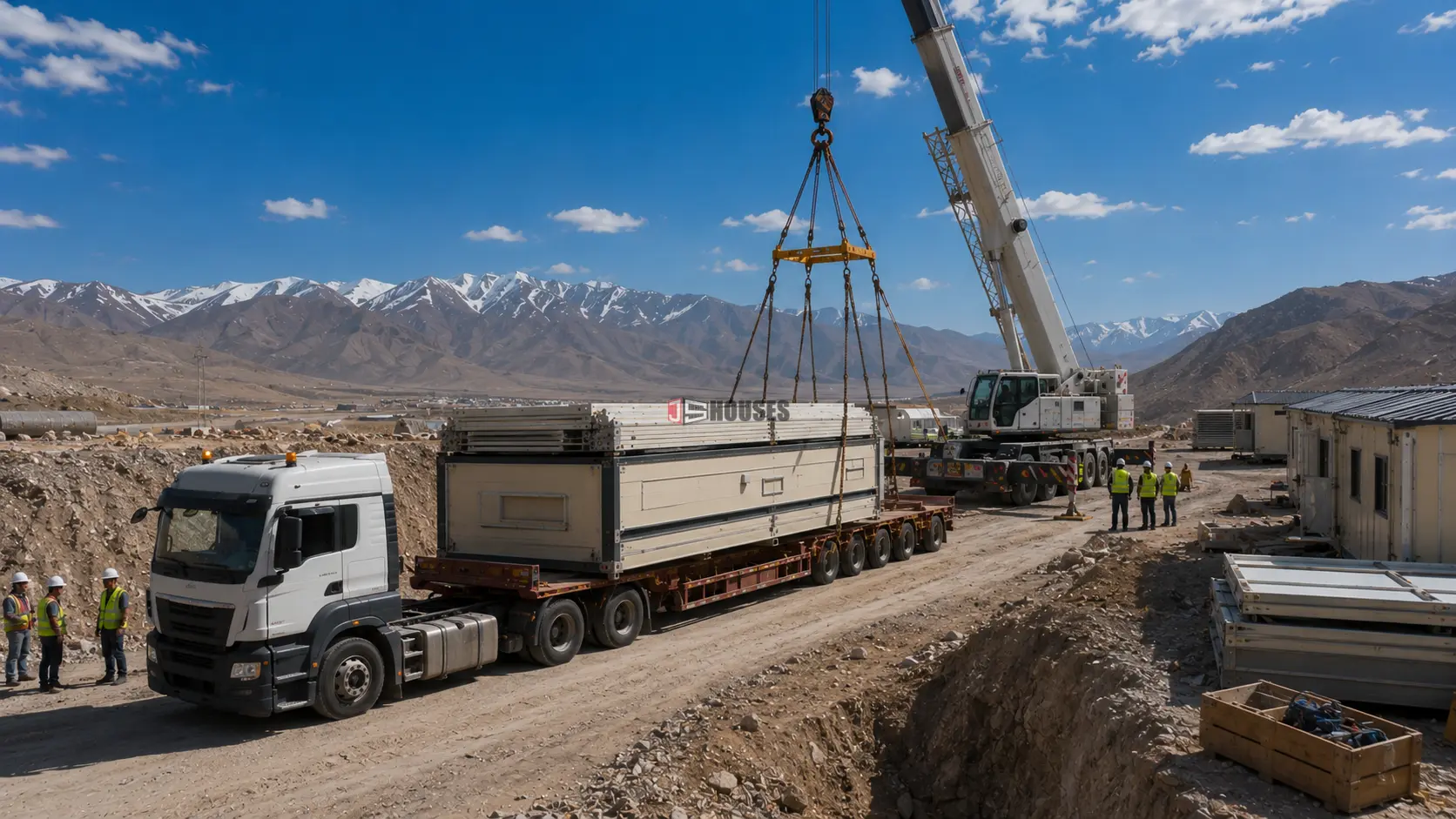
The site entrance also needs to be considered.
Can the vehicle enter?
Where will it stop?
Can the module be unloaded safely?
Is there enough space for a crane?
Where will the next module wait?
These questions can determine whether installation proceeds smoothly or becomes unexpectedly complicated.
Delivery does not end when the truck arrives.
⚠️ Before Delivery, Check These 4 Things
- Site access — Can the vehicle enter the site safely?
- Unloading space — Is there enough room to remove the module from the trailer?
- Crane position — Does the crane have stable ground and sufficient reach?
- Temporary storage area — Where can modules wait before installation?
4. Transportation and Installation Are Closely Connected
One of the most important differences between modular buildings and conventional construction is that transportation and installation cannot be completely separated.
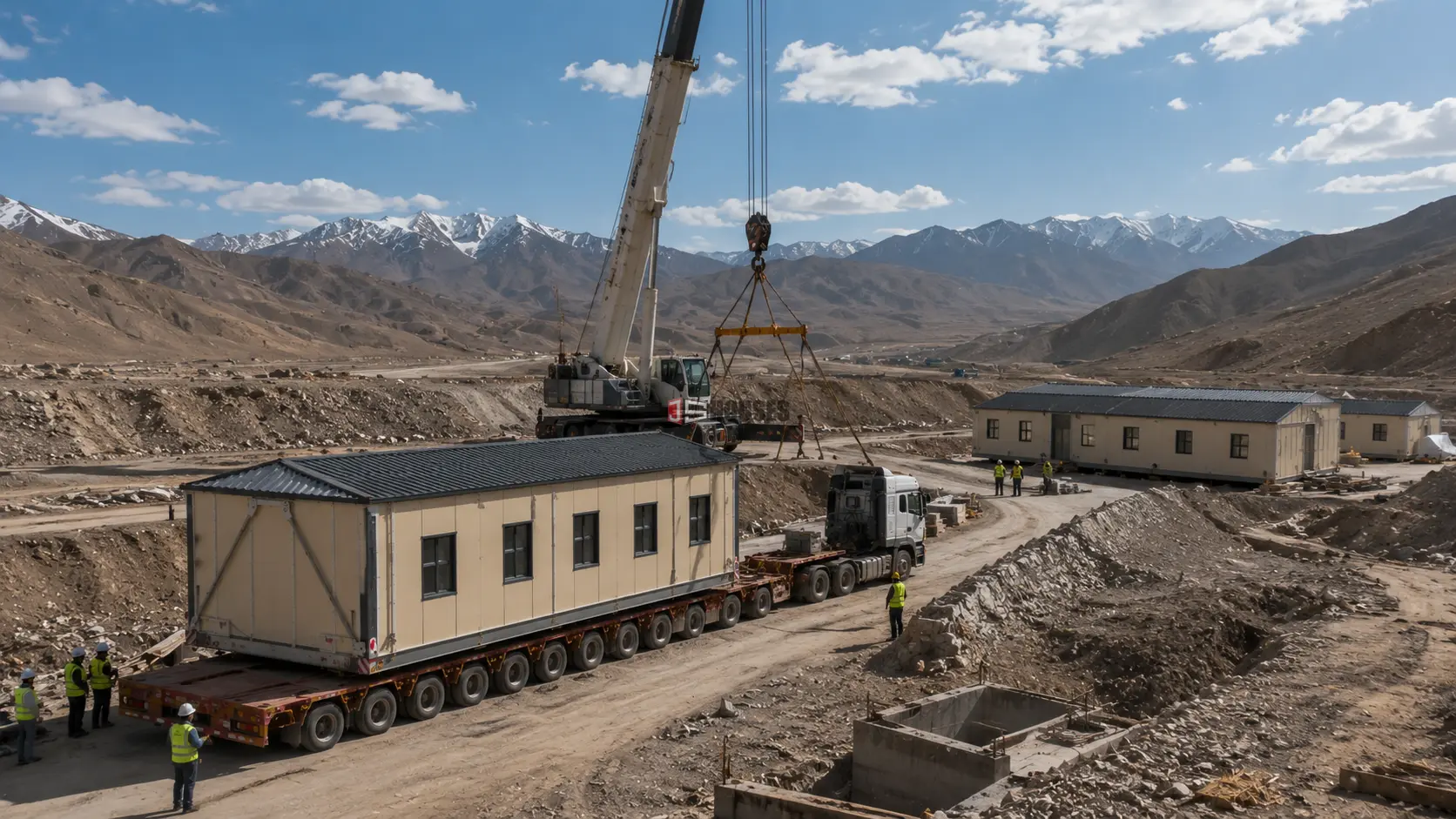
Once the modules arrive, they usually need to be:
- Unloaded
- Positioned
- Lifted
- Aligned
- Connected
- Integrated with utilities
This means delivery order matters.
Imagine a modular worker camp where the buildings closest to the center of the site need to be installed first.
If those modules arrive last, other buildings or equipment may already be blocking access.
The result can be unnecessary relocation, temporary storage, additional crane operations or delays.
Experienced project managers therefore think about installation sequence while planning transportation.
The question is not only:
"Can we deliver all the modules?"
It is:
"Can we deliver them in the right order and install them efficiently?"
For large modular homes housing projects, construction camps and industrial accommodation, this distinction can have a major effect on site efficiency.
5. What Experienced Project Managers Plan Differently
Experienced managers do not necessarily have more complicated plans.
They simply ask important questions earlier.
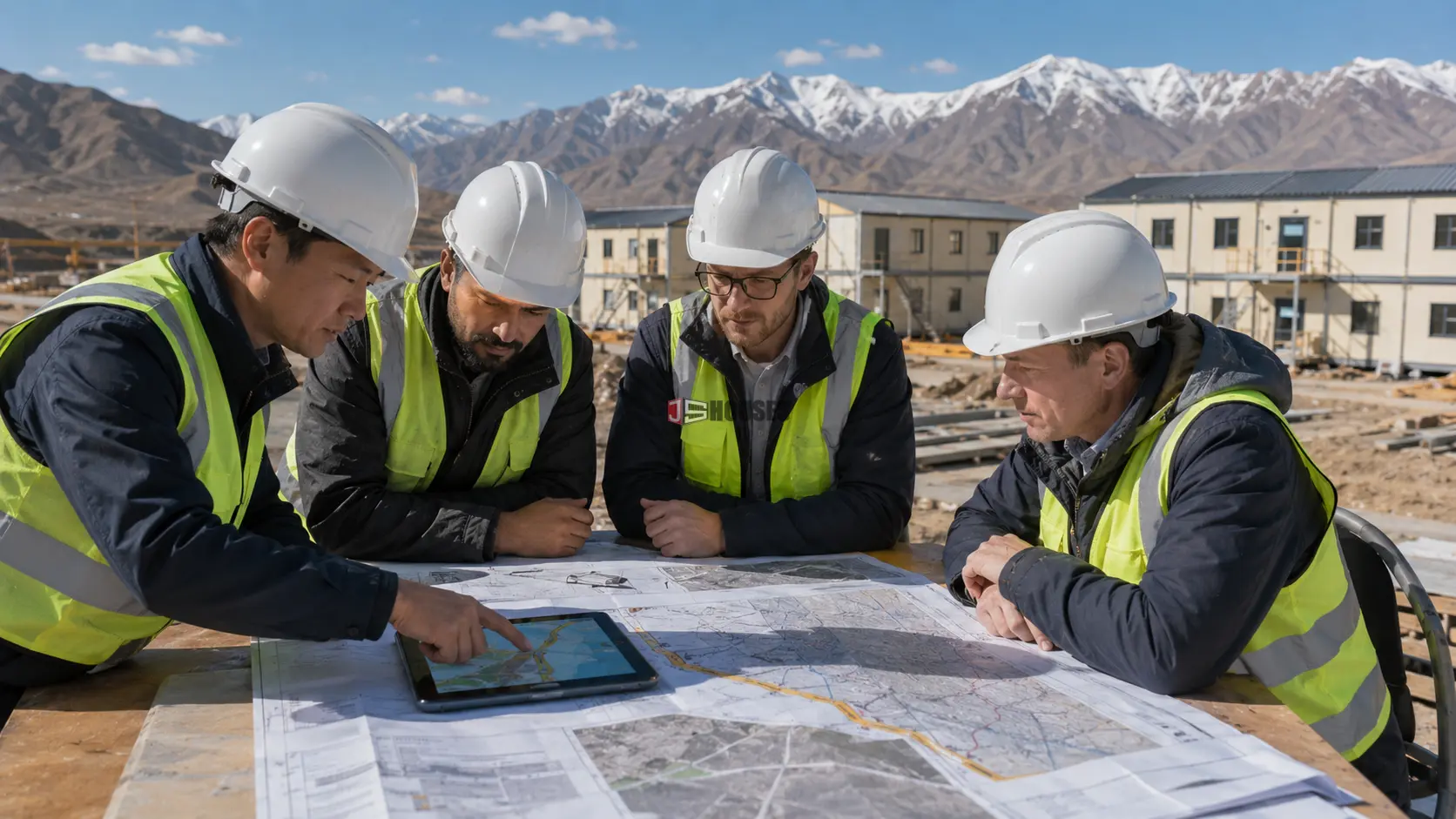
Before ordering prefab homes or modular buildings, they may want to know:
What transport method will be used?
Different module sizes and weights may require different trailers and handling equipment.
What is the maximum transport dimension?
The largest module may determine the route and vehicle configuration.
Has the entire route been checked?
The factory location and project destination are only two points. Everything between them matters.
Where will unloading happen?
The delivery area should allow the module to be removed safely from the vehicle.
Where will the crane stand?
Crane positioning may require sufficient ground bearing capacity, working radius and clearance.
What happens if access changes?
Weather, construction progress, temporary roads or local restrictions can change site conditions.
How many modules can realistically be delivered per day?
Delivery frequency matters for large camps. Too many modules arriving at once can create site congestion, while too few can slow the installation process.
First-Time Planning vs. Experienced Planning
❌ First-Time Planning
- Thinks about factory delivery
- Focuses on module price
- Plans an arrival date
- Looks only at the destination
- Thinks about delivery alone
✅ Experienced Planning
- Thinks about the complete route
- Considers total transport cost
- Plans the unloading sequence
- Checks road and site access
- Thinks about delivery and installation together
6. Good Modular Design Makes Transportation Easier
Transportation efficiency is not determined by the logistics team alone.
It starts with the building.
A well-designed modular building considers transport requirements from the beginning.
This may include standardized dimensions, practical module weights, suitable lifting points, efficient packaging or protection, and compatibility with commonly used transport systems.
For modern modular homes, prefab houses, and modular worker accommodation, transportability can become a genuine part of the building's long-term value.
The easier a structure is to transport, install, dismantle and move again, the more flexible it becomes throughout its service life.
This is particularly useful for projects where buildings may later be:
- Relocated
- Expanded
- Reconfigured
- Reused
- Installed at another project site
In other words, the best modular building is not simply one that looks good in a factory catalogue.
It is one that can successfully complete the entire journey from factory to site.
Conclusion: Transportation Is Part of Modular Building Design
It is easy to think of modular building transportation as a logistics problem that begins after manufacturing.
In reality, it begins much earlier.
Module dimensions influence vehicle selection.
Vehicle selection influences route requirements.
Route conditions influence delivery planning.
Delivery planning influences unloading and crane operations.
And all of these factors affect installation efficiency.
That is why experienced project managers treat transportation as part of the overall modular construction process.
A modular building can be designed beautifully, manufactured precisely and installed quickly—but if it cannot move efficiently from the factory to the project site, the benefits of modular construction become much harder to realize.
The easiest modular building to transport is often the one that was designed with transportation in mind from day one.
❓ FAQ – Modular Building Transportation
Need help planning modular building transport? Contact our team →