
How Do Experienced Project Managers Plan Modular Camps?
How Do Experienced Project Managers Plan Modular Camps?
From Initial Requirements to a Successful Project Solution
When people talk about modular camps, the first thing they usually think about is the buildings themselves.
How many rooms are needed?
What type of prefab buildings should be selected?
How much will the project cost?
These questions are important, but experienced project managers know that a successful modular camp is not created by simply placing several buildings on an empty site.
A well-designed modular camp is a complete living and working environment.
It needs to support workers, improve operational efficiency, reduce maintenance costs, and remain flexible as project requirements change.
This is why experienced project managers usually start with a different question:
"What does this project really need throughout its entire lifecycle?"
From site conditions and workforce planning to future expansion and relocation, every decision made during the planning stage can influence the long-term success of the project.
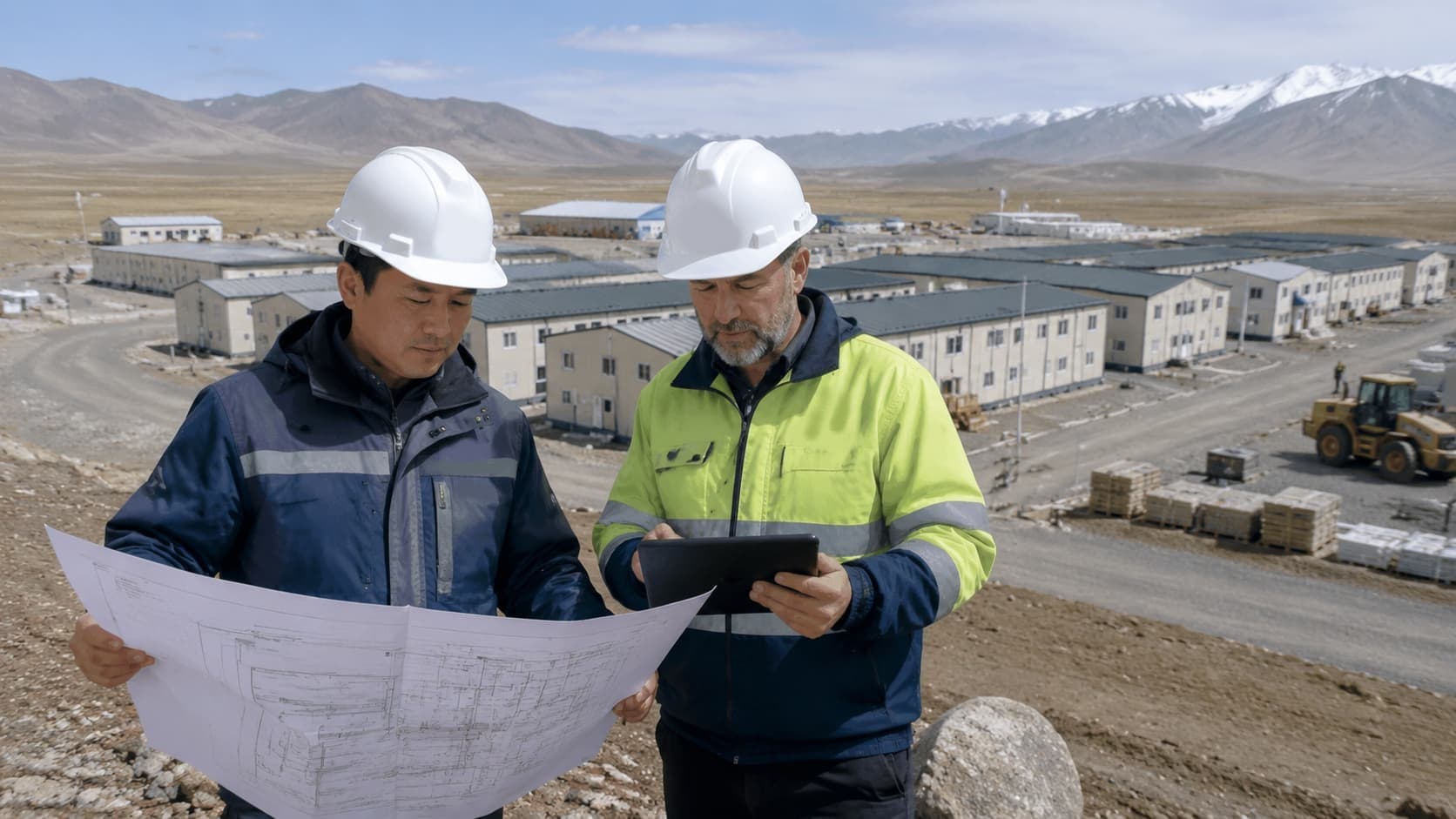
1. Start With the Project, Not the Building
One of the biggest differences between experienced and inexperienced project planners is where they start.
Many first-time buyers begin with the building itself.
They search for:
- the lowest price;
- the fastest delivery;
- the largest room capacity;
- the most attractive design.
However, experienced project managers usually begin with the project requirements.
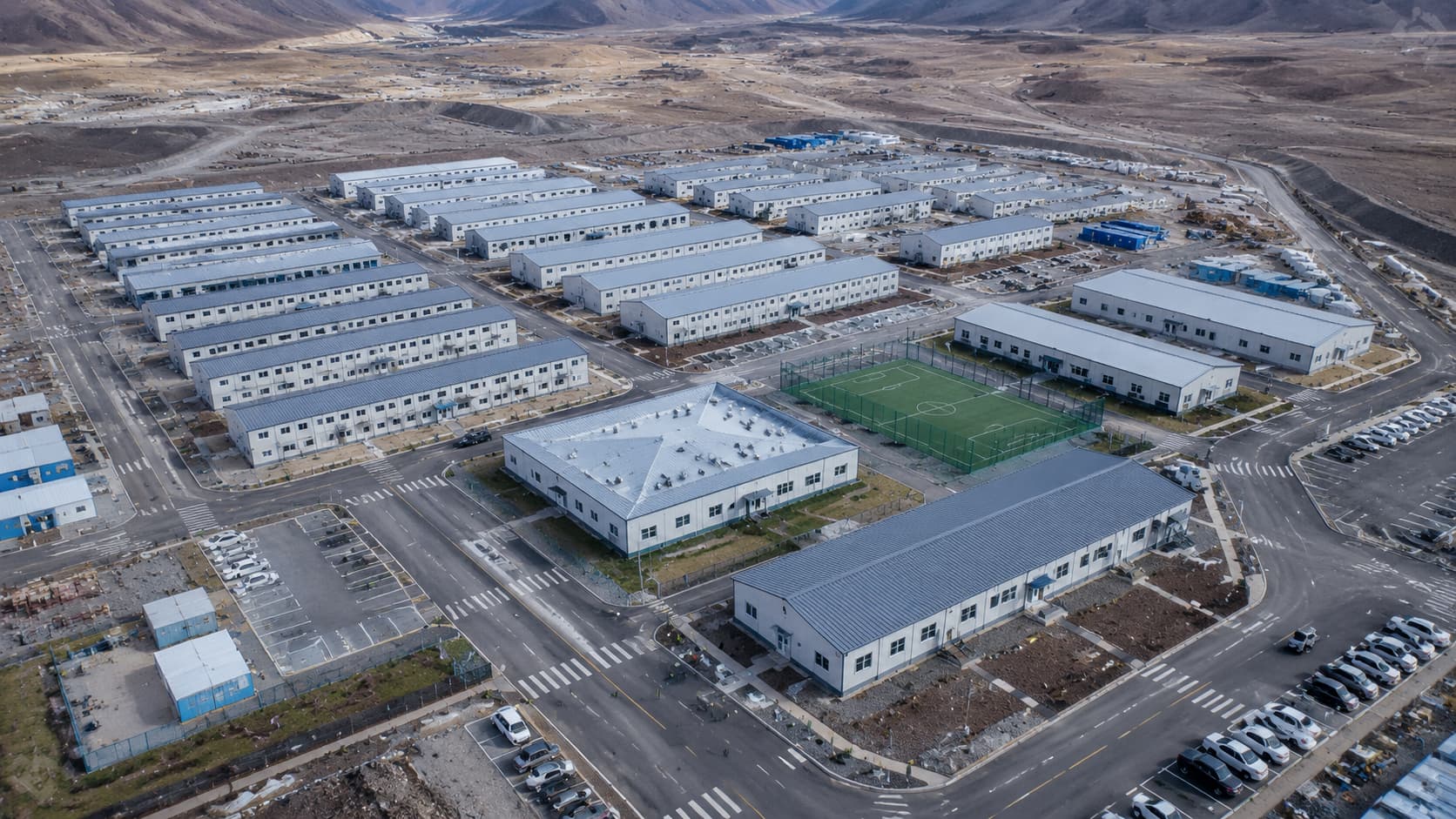
Before selecting modular buildings, they consider several key factors:
Project duration
A temporary mining project, a long-term industrial site, and a permanent remote community may require completely different solutions.
A building designed for several months of use may have different priorities compared with a facility expected to operate for ten years.
Workforce changes
The number of workers on a project is rarely fixed.
A construction site may start with a small team and gradually expand.
Experienced managers consider whether the accommodation can be expanded, reorganized, or relocated in the future.
Local environment
Climate and geographical conditions directly influence the choice of materials and construction methods.
Projects in cold regions require better insulation systems.
Remote areas require easier transportation and installation.
Coastal or humid environments require stronger corrosion protection.
A good modular accommodation solution begins with understanding the environment, not choosing a building from a catalog.
A successful modular camp is not the result of choosing the biggest or cheapest building. It is the result of choosing the right solution for the entire project.
2. A Modular Camp Is More Than Just Worker Accommodation
Another common misunderstanding is that a construction camp is simply a group of dormitory buildings.
In reality, a professional construction camp is a small operating community.
A complete modular camp may include:
- Worker dormitories
- Management offices
- Dining facilities
- Sanitary facilities
- Storage areas
- Recreation spaces
- Medical rooms
- Utility areas
- Parking and transportation zones
The arrangement between these areas directly affects daily efficiency.
For example:
If dining facilities are too far from accommodation areas, workers spend more time moving.
If storage areas are poorly planned, material transportation becomes inefficient.
If utility systems are not considered early, later modifications can become expensive.
Experienced project managers think about the movement of people, materials, and services.
They do not only design buildings.
They design the entire working environment.
3. Choosing the Right Modular Building Solution
After understanding the project requirements, the next step is selecting the appropriate modular building system.
Not every project requires the same type of solution.
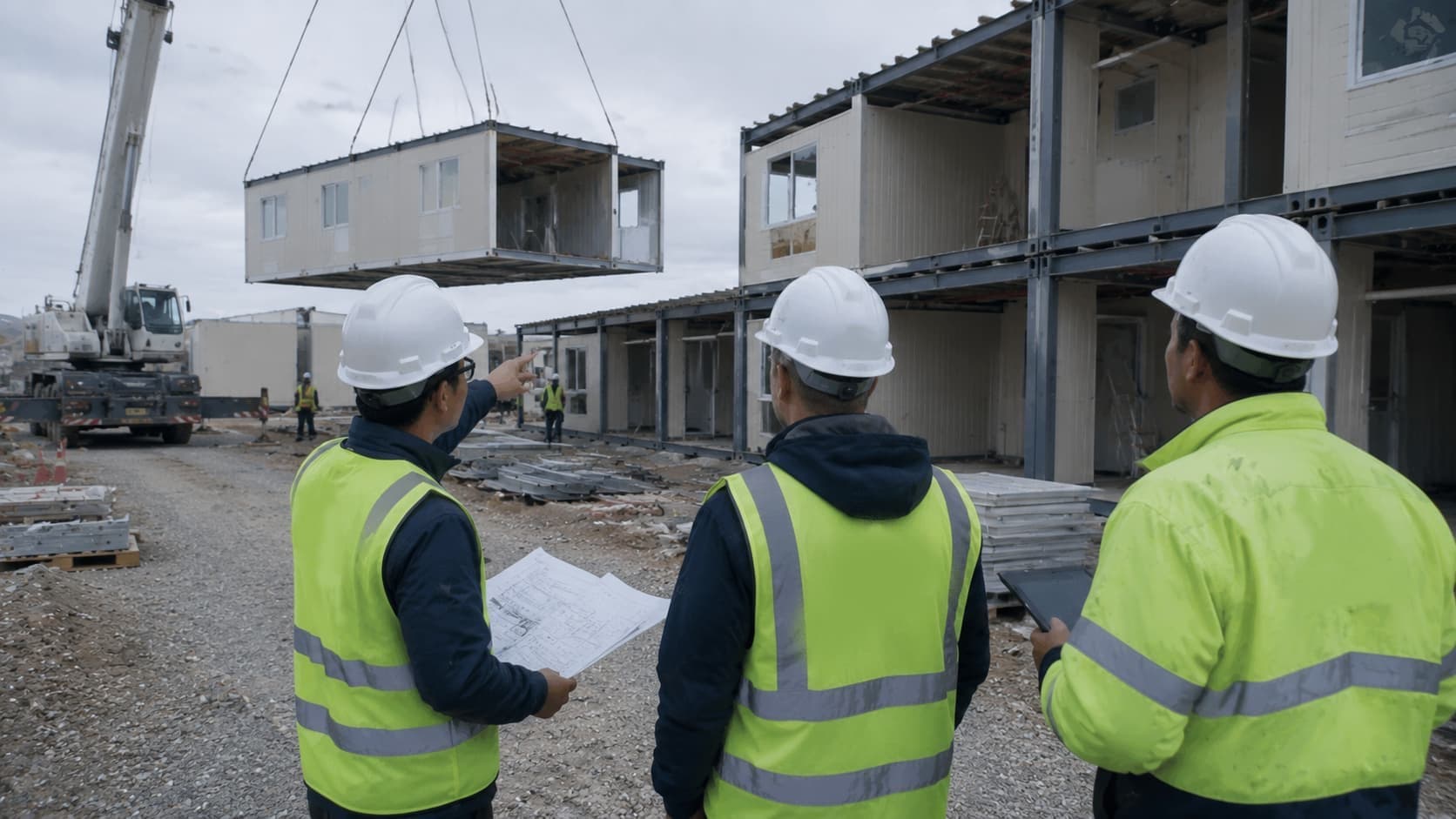
For example:
Short-term projects may prioritize rapid deployment and easy relocation.
Long-term projects may require stronger structures, higher insulation performance, and better comfort.
Remote projects may focus more on transportation efficiency and installation convenience.
Modern prefab homes, modular homes, and prefab buildings provide different advantages depending on their design.
Some projects may use:
- Standard modular units for worker accommodation;
- Expandable structures for future growth;
- Foldable house solutions for rapid deployment;
- Customized modular buildings for complex requirements.
The most important decision is not choosing the most advanced building.
It is choosing the building that matches the project's actual conditions.
Different Projects Require Different Modular Solutions
🏗️ Project Type
- Short-term construction project
- Remote industrial project
- Long-term camp
- Growing project
🎯 Main Requirement
- Fast installation
- Easy transportation
- Durability & comfort
- Future expansion
✅ Suitable Solution
- Rapid modular accommodation
- Compact modular buildings
- High-quality prefab buildings
- Expandable modular solutions
4. Experienced Managers Plan for What Happens After Construction
A common mistake in project planning is focusing only on the beginning.
Many people think:
"The camp is completed, workers move in, and the project is finished."
Experienced managers think further.
They ask:
What happens if the workforce increases?
What happens if the project location changes?
What happens after the project is completed?
This is why flexibility has become an important advantage of modern modular construction.
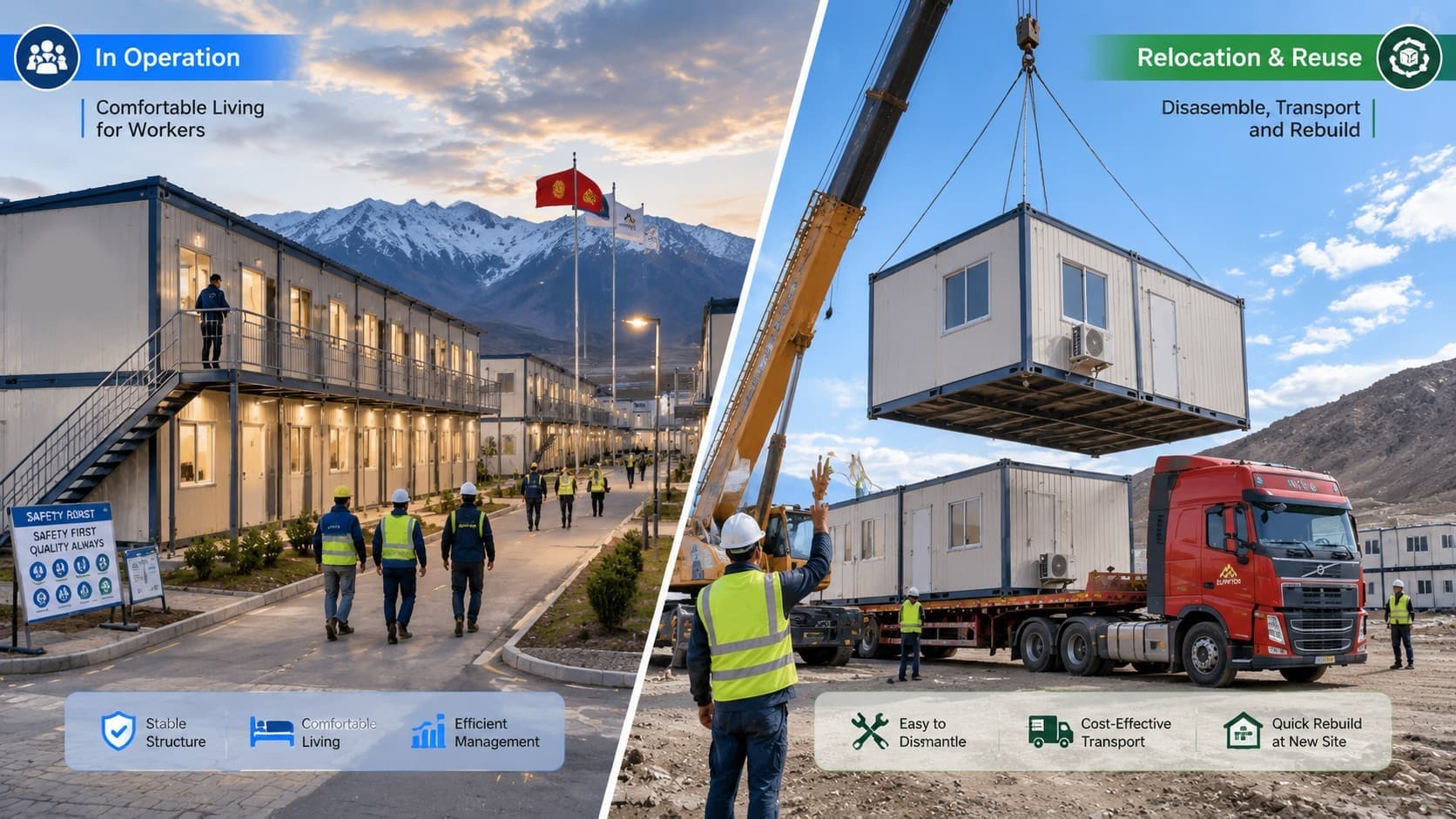
Well-designed modular buildings can often be:
- Expanded with additional units;
- Relocated to another site;
- Modified for different purposes;
- Reused in future projects.
For companies operating multiple construction projects, mining sites, or industrial developments, this flexibility can create additional long-term value.
A modular building is not only a temporary structure.
With proper planning, it can become a reusable project asset.
5. The Key Skill of Experienced Project Managers: Coordination
A successful modular camp project is rarely completed by one department alone.
It requires cooperation between:
- Project managers;
- Engineers;
- Finance teams;
- Suppliers;
- Construction teams.
Each group has different priorities.
Project managers focus on:
- Schedule;
- Safety;
- Practical operation.
Finance teams focus on:
- Budget;
- Cost control;
- Investment value.
Suppliers focus on:
- Technical feasibility;
- Manufacturing;
- Delivery.
The role of an experienced project manager is to connect these different perspectives and find a balanced solution.
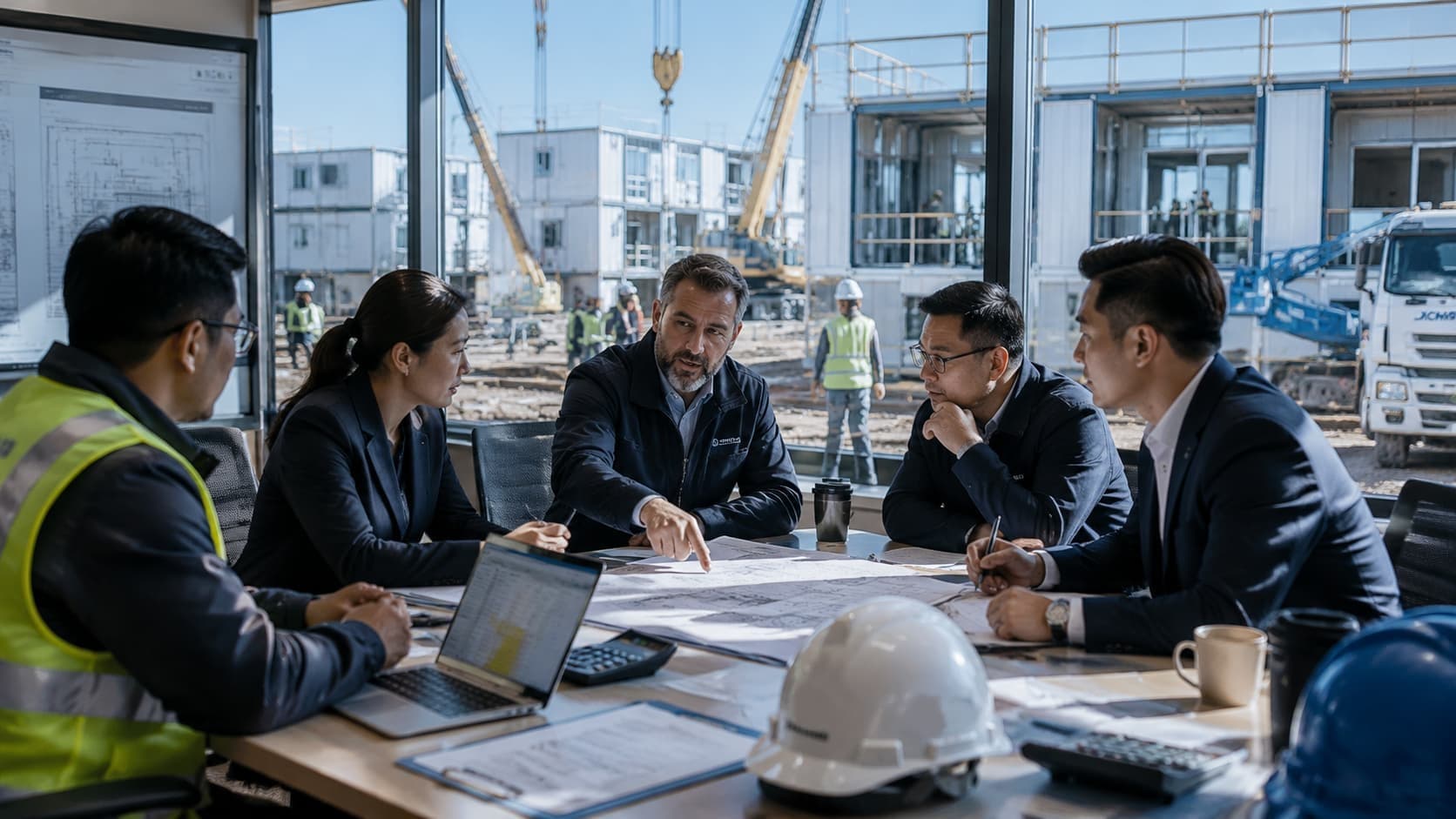
A slightly cheaper option may not always be the best choice if it creates higher maintenance costs later.
A more expensive option may not always be necessary if a simpler solution already meets the project requirements.
The best decision is the one that creates the highest value throughout the project lifecycle.
How Different Teams View a Modular Camp Project
👥 Team
- Project Manager
- Finance Team
- Supplier
- Workers
🎯 Main Concern
- Schedule, safety, efficiency
- Budget and long-term cost
- Technical solution and delivery
- Comfort and usability
Conclusion: Good Planning Creates Better Modular Camps
The success of a modular camp is determined long before the first building arrives on site.
It begins with careful planning.
Experienced project managers do not start by asking:
"Which building should we buy?"
They start by asking:
"What solution will support this project from beginning to end?"
A successful modular accommodation project combines the right buildings, proper planning, efficient layout, reliable suppliers, and consideration for future changes.
Because the best modular camp is not simply the one that can be built quickly.
It is the one that continues creating value throughout the entire project lifecycle.
❓ FAQ – Modular Camp Planning
Need help planning your modular camp? Contact our team →