
Glass Curtain Wall Prefab Buildings: Is More Glass Always Better?
Glass Curtain Wall Prefab Buildings: Is More Glass Always Better?
A practical look at sunlight, solar heat, indoor comfort, air conditioning and shading solutions
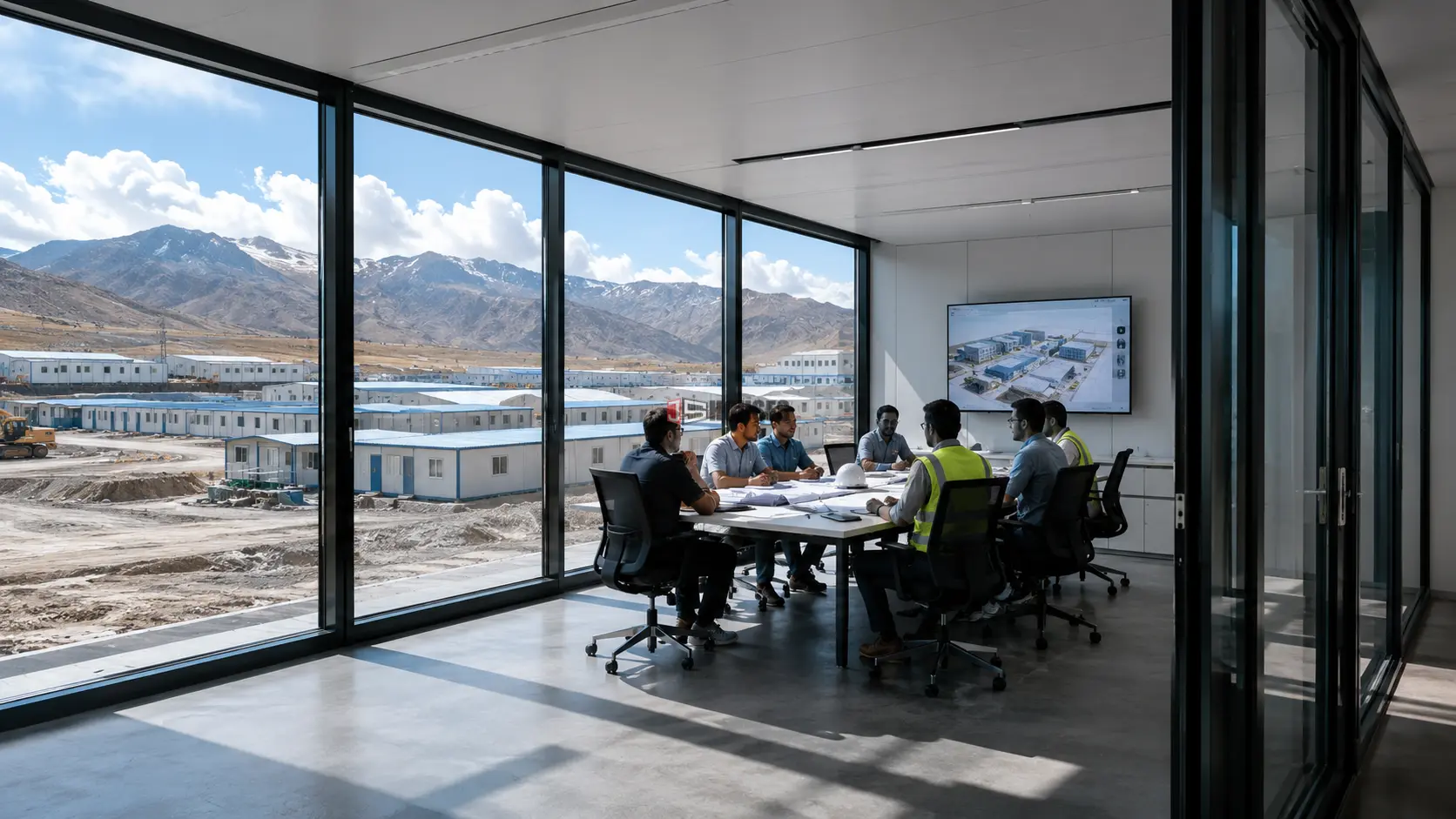
Imagine walking into a modern meeting room with glass walls on two or even three sides.
During the morning, natural light fills the room. You can see the surrounding landscape without leaving your seat, and the space feels open and bright. There may be little need to turn on artificial lighting.
But several hours later, the experience can change.
The sun moves across the sky. Direct sunlight reaches the glass. One side of the room becomes noticeably brighter, the screen may become harder to see, and the area close to the windows may feel warmer.
This raises an interesting question:
If glass curtain walls provide so much natural light and openness, does using more glass always make a prefab building better?
The answer is not simply yes or no.
The real question is how the glass, shading system, air conditioning, building orientation and interior requirements work together.
For a modern glass curtain wall prefab building, good design is not about using as much glass as possible. It is about finding the right balance between natural light, solar control, comfort and functionality.
1. A Glass Curtain Wall Changes More Than the Appearance of a Building
The most obvious advantage of a glass curtain wall is its appearance.
Large areas of glazing can make a prefab house or modular building look more modern and visually open. They can also connect the interior with the surrounding environment.
For a remote construction project, for example, a glass-walled meeting room can provide a very different experience from a traditional enclosed office.
Instead of looking at four solid walls, project managers and engineers can see the construction site, surrounding landscape or mountains outside.
For a camp near a lake, resort, industrial site or scenic area, this visual connection can become part of the building's value.
Natural daylight is another major advantage.
A well-positioned glass facade can allow daylight to reach deep into the interior, reducing the need for artificial lighting during certain periods of the day.
However, more daylight also means more solar radiation.
And this is where the design becomes more complicated.
A window is not simply a transparent wall.
It is also one of the parts of a building through which solar energy can enter.
This means that a comfortable glass curtain wall building needs to consider both sides of the equation:
More natural light — but controlled solar heat.
Why Can Large Glass Areas Be Affected by Solar Heat?
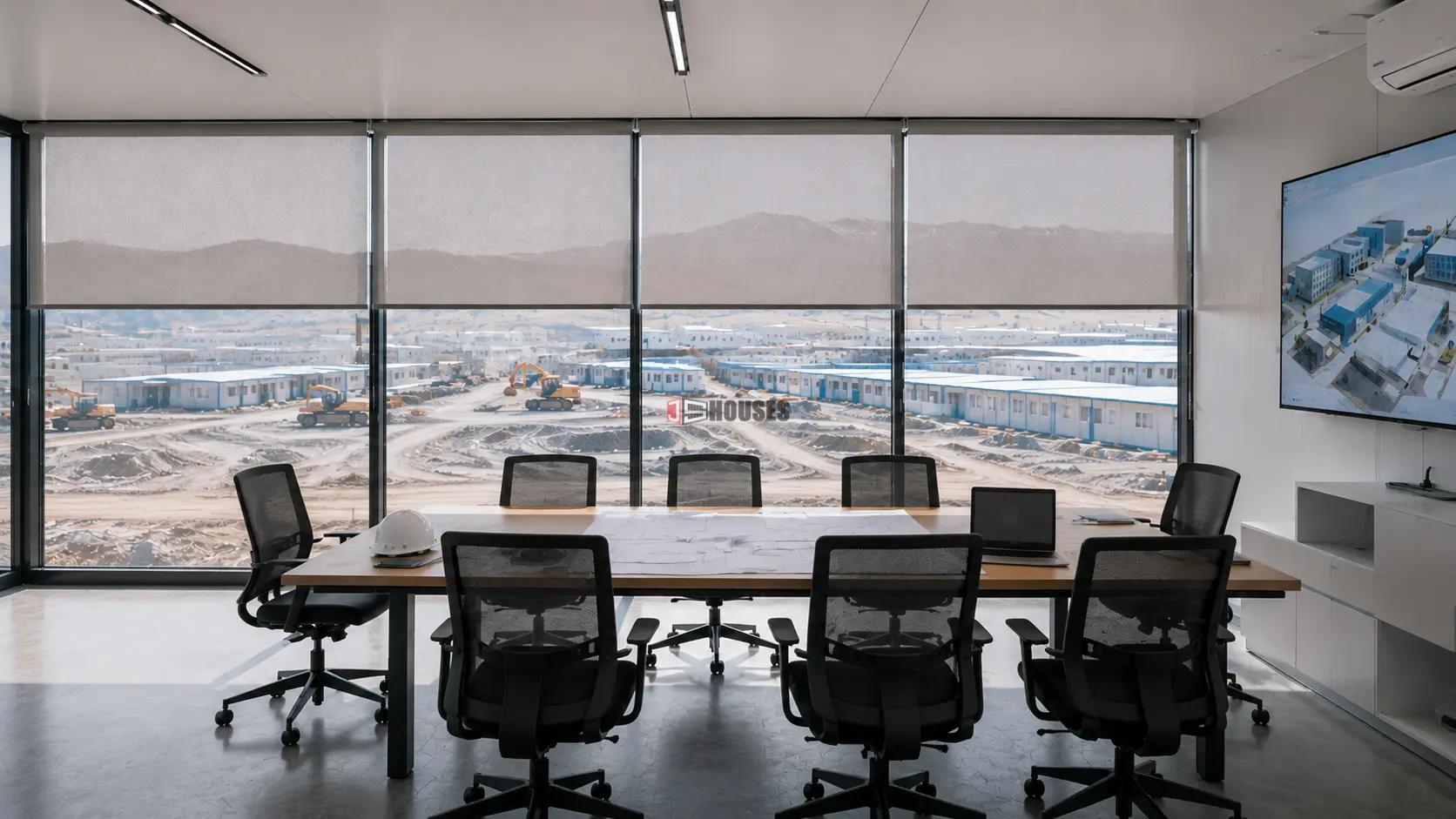
To understand the performance of a glass curtain wall, it helps to separate three concepts that are sometimes treated as the same thing:
Light transmission, solar heat gain and thermal insulation.
They are related, but they are not identical.
Visible light allows us to see and provides natural illumination.
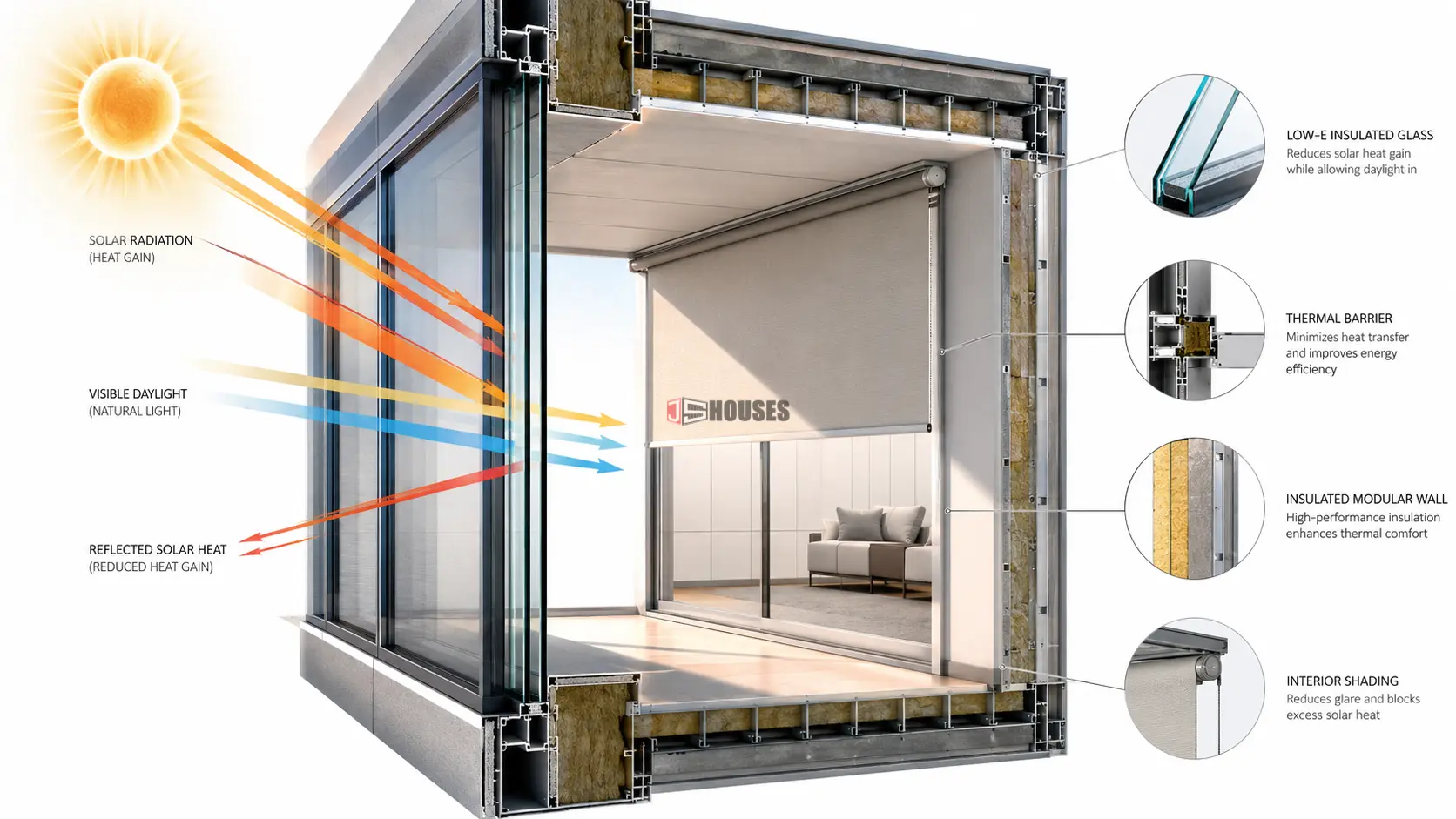
Solar radiation, however, contains energy beyond visible light, including infrared radiation. When solar energy passes through glazing and enters an indoor space, part of that energy becomes heat.
This is why a room can become warmer even when the outdoor air temperature has not changed dramatically.
The type of glass therefore matters.
Modern glazing systems may use technologies such as:
- Double glazing
- Low-E glass
- Tinted or solar-control glass
- Laminated glass
One useful technical indicator is the Solar Heat Gain Coefficient (SHGC).
In simple terms, SHGC describes how much solar radiation is allowed to enter through a glazing system.
A lower SHGC generally means less solar heat enters the room through the glass.
However, glass selection is only one part of the solution.
Building orientation, shading, ventilation and air conditioning can also have a significant influence on indoor comfort.
What Is SHGC?
Solar Heat Gain Coefficient (SHGC) measures how much solar radiation passes through glazing. A lower SHGC means less solar heat enters the room.
Higher SHGC
More solar heat enters
Lower SHGC
Less solar heat enters
What Does a Glass Meeting Room Actually Feel Like During the Day?
Instead of looking only at technical specifications, imagine using a glass curtain wall prefab building as a meeting room.
The experience can change throughout the day.
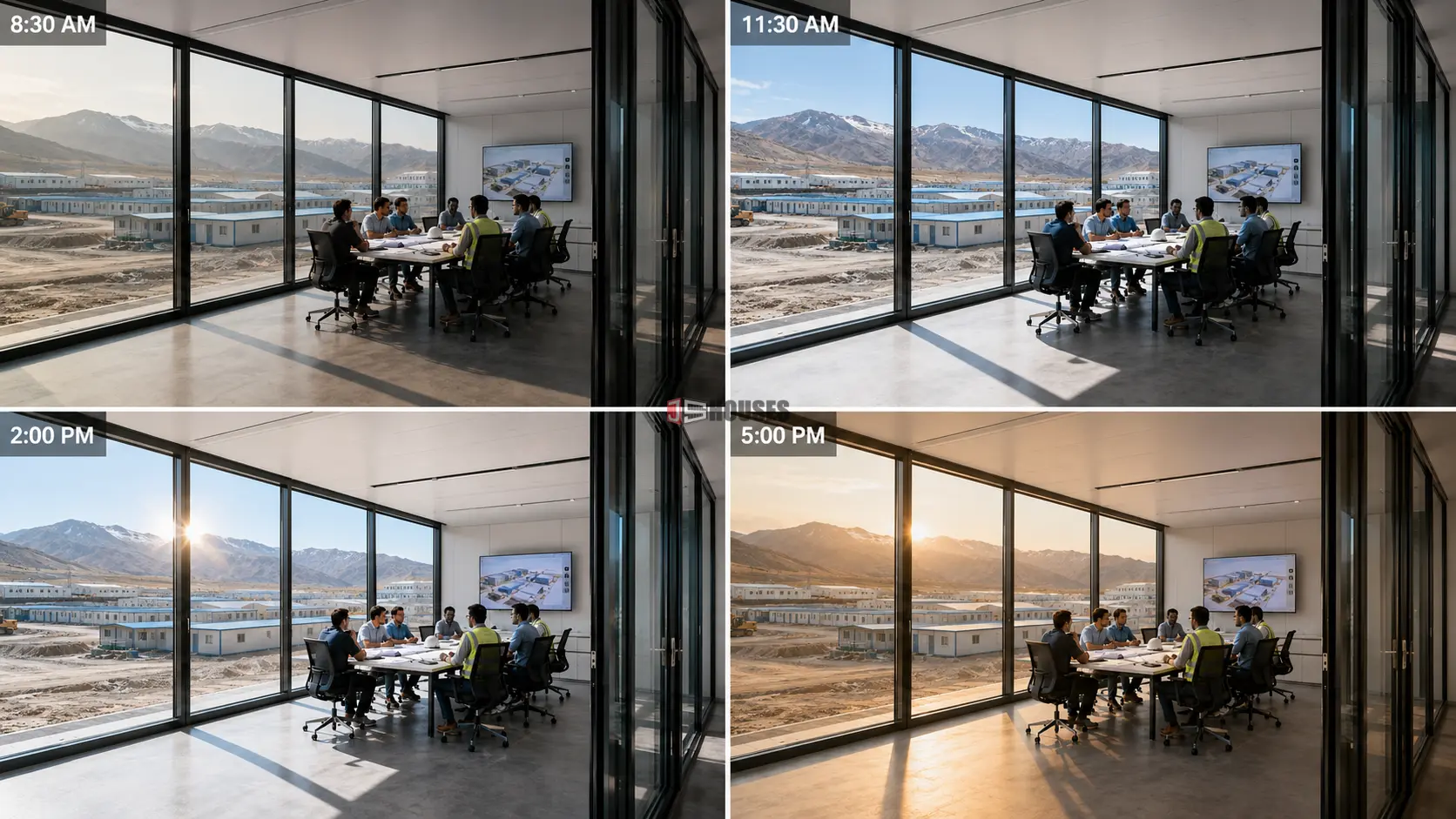
08:30 — Morning Meeting
The sunlight is relatively soft.
Natural light enters through the glass facade, creating a bright and comfortable environment.
The meeting room may require less artificial lighting, while the view outside gives the space a more open feeling.
11:30 — Stronger Sunlight
As the sun becomes stronger, the amount of direct sunlight entering the room can increase.
Depending on the orientation of the building, certain areas of the room may become significantly brighter.
If a display screen or projector is positioned directly opposite a bright glass facade, reflections may also become more noticeable.
14:00 — Afternoon Heat
This is often the more challenging period.
If direct sunlight reaches a large glass surface for several hours, solar heat gain can increase the cooling demand of the room.
People sitting close to the windows may notice the difference more than people sitting further inside.
This does not mean that the glass curtain wall has failed.
It means that the glazing system is interacting with the sun, just as any large window would.
17:00 — Evening
As direct solar radiation decreases, the advantages of the glass facade become more obvious again.
The room can retain its natural brightness while providing a wide view of the surrounding environment.
This simple example shows something important:
The experience of a glass curtain wall is highly dependent on time, orientation and how the room is used.
There is no universal answer to whether "more glass" is better.
The better question is:
Where should the glass be used, and how should it be controlled?
4. Solar Protection Does Not Mean Covering the Glass
When people hear the phrase "solar protection", they sometimes imagine covering the entire glass facade.
That is not necessarily the goal.
The purpose of solar control is to reduce excessive heat and glare while keeping the advantages of natural daylight and visibility.
There are several ways to achieve this.
Interior Blinds and Curtains
The simplest solution is often an interior shading system.
Blinds or curtains allow occupants to adjust the amount of sunlight according to the time of day.
For a meeting room, this can be particularly useful.
When a presentation begins, the blinds can be partially or completely closed to reduce glare on the screen.
When the meeting ends, they can be opened again to restore the view and natural light.
External Shading
External shading systems can include:
- Sunshades
- Louvers
- Canopies
- Other architectural shading structures
The main advantage is that they can block part of the solar radiation before it reaches the glazing.
This is different from an interior curtain, which controls sunlight after it has already passed through the glass.
Solar-Control Glass
The glazing itself can also contribute to solar control.
Depending on the project requirements, different glass specifications can be considered to balance:
- Visible light transmission
- Solar heat gain
- Thermal insulation
- Appearance
This leads to an important point:
Glass performance and shading systems are not competing solutions. They can work together as part of the same building design.
Air Conditioning, Curtains and Accessories Should Be Considered Earlier
Another interesting aspect of modular construction is the ability to integrate practical accessories into the building design.
A meeting room may look complete when the modules leave the factory.
But once the building starts operating, the user may need:
- Air conditioning
- Blinds
- Curtains
- Lighting equipment
- Projectors
- Displays
- Network equipment
- Additional electrical outlets
This is where planning becomes important.
For example, if an air-conditioning system is added later, the installation may require consideration of:
- Indoor unit location
- Outdoor unit location
- Refrigerant pipe routing
- Drainage
- Electrical connections
Similarly, if motorized blinds are required, the building may need appropriate installation points and electrical connections.
Even a simple curtain rail can benefit from having suitable fixing points prepared in advance.
For modular buildings, these details can often be considered during the design and manufacturing stage.
This can make later installation cleaner and easier.
Planned Installation vs. Late Installation
✅ Planned During Design
- Reserved fixing points
- Planned cable routing
- Pre-arranged drainage
- Integrated appearance
- Faster accessory installation
⚠️ Added Later
- Additional drilling may be required
- Exposed cables may appear
- More complicated installation
- Greater impact on interior aesthetics
- Additional site work
This is one of the less visible advantages of good modular building design.
The goal is not simply to manufacture a building that can be installed quickly.
It is to create a building that remains practical after installation.
6. So, Is More Glass Really Better?
After considering sunlight, solar heat, indoor comfort and accessories, the answer becomes clearer.
More glass is not automatically better.
But neither is reducing glass automatically the better solution.
The real objective is balance.
A well-designed glass curtain wall prefab building should consider several factors together:
Glass Performance · Building Orientation · Solar Shading · Air Conditioning · Ventilation · Accessory Installation Points = Better Indoor Comfort
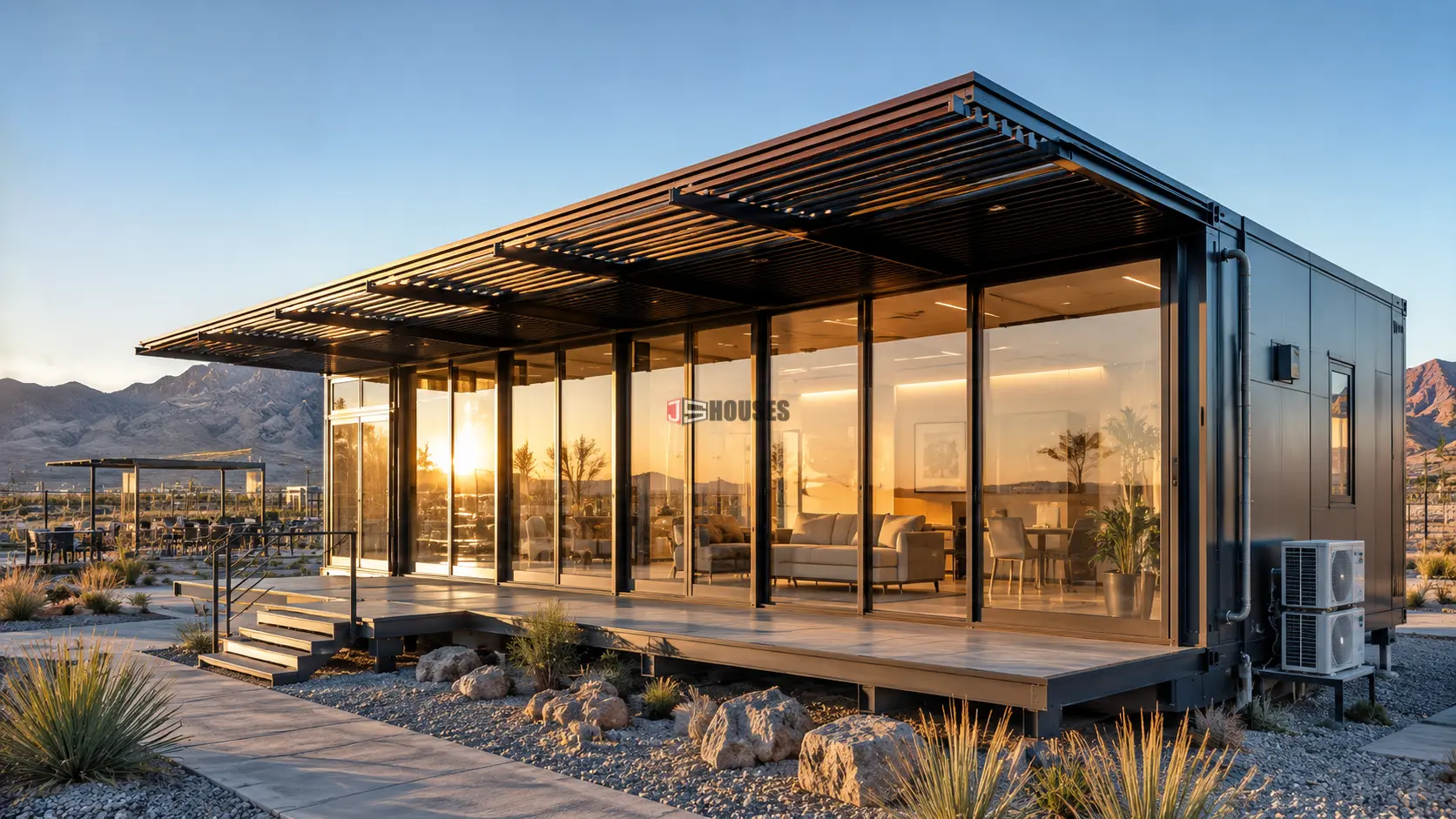
A meeting room with large glass walls can provide excellent daylight, wide views and a modern working environment.
A modular office can feel much more open than a conventional enclosed building.
A glass-walled facility in a scenic location can also make the surrounding environment part of the user experience.
But these benefits work best when the building is designed around its actual environment and purpose.
The problem is not necessarily too much glass.
The bigger problem can be too little planning.
For a modern glass curtain wall prefab building, the best result comes from treating glazing, shading, air conditioning, electrical systems and interior use as parts of one integrated solution.
That is what turns a visually attractive modular building into a genuinely comfortable and practical one.
The problem isn't too much glass. The problem is too little planning.
❓ FAQ – Glass Curtain Wall Prefab Buildings
Interested in a glass curtain wall prefab solution? Contact our team →