
How Can a Few Bolts Hold an Entire Modular Building Together?
How Can a Few Bolts Hold an Entire Modular Building Together?
The Engineering Behind Multi-Story Modular Connections
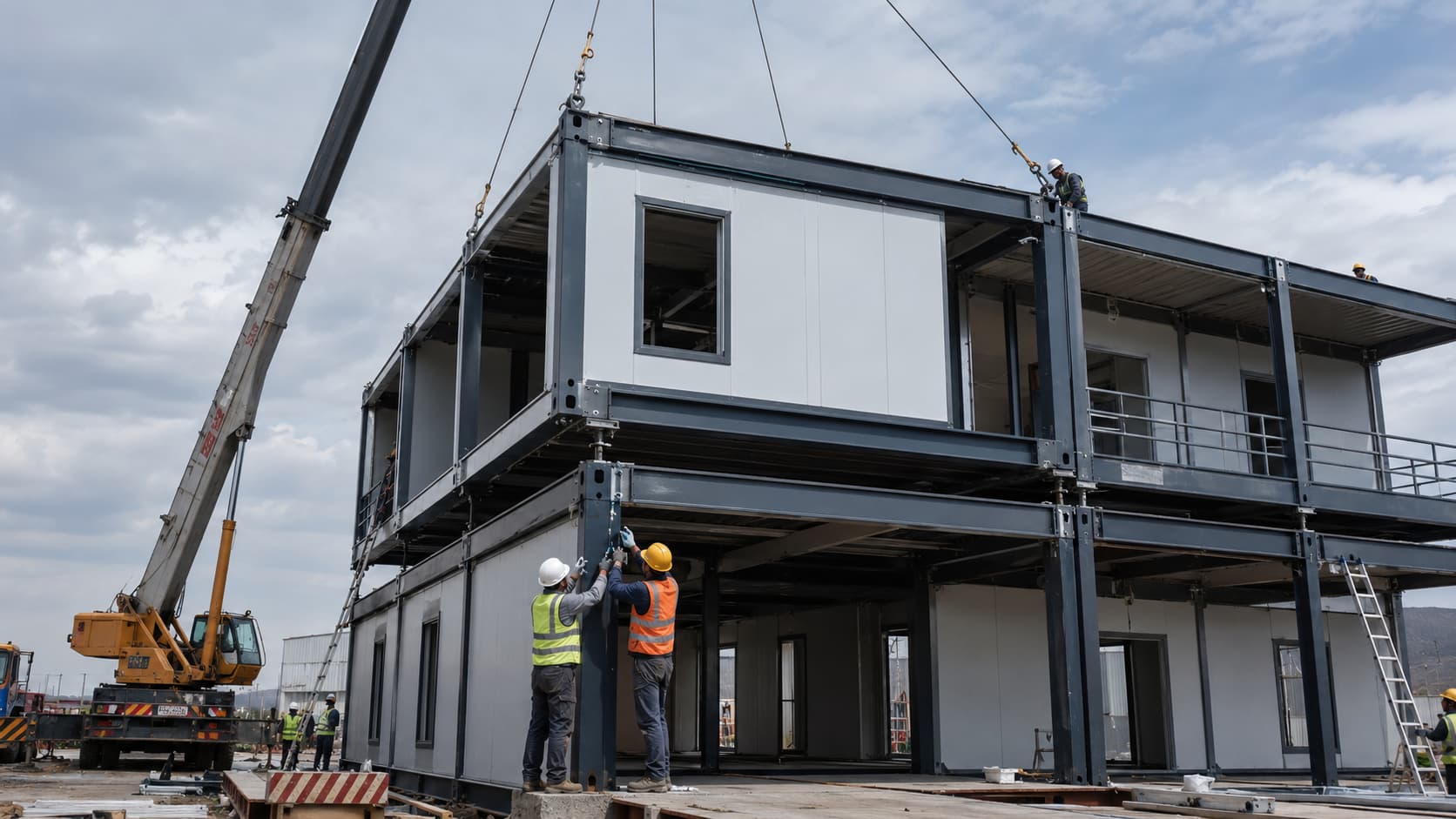
If you've ever watched a modular building being installed on a construction site, you've probably had the same question as many first-time visitors.
A crane carefully lifts a complete room into the air.
It is lowered into position.
Workers align the corners.
A few connection points are secured.
Then the crane moves away.
At first glance, the entire building appears to be held together by only a handful of bolts.
It almost looks too simple to be true.
So how can a multi-story modular building safely support dozens—or even hundreds—of people?
The answer is surprisingly straightforward:
It isn't the bolts alone that make a modular building strong.
It's the entire structural connection system working together.
🔍 Does a modular building really rely on just a few bolts?
- How can stacked modules remain stable?
- What keeps the structure safe during years of use?
A Bolt Is Only One Part of the Connection System
One of the biggest misconceptions about modular homes is that the corner bolts carry the entire weight of the building.
In reality, these bolts are only one component of a carefully engineered structural system.
Every module is manufactured with a rigid steel frame.
When two modules are connected, engineers are not simply fastening two boxes together—they are connecting two structural frames that are designed to transfer loads through multiple paths.
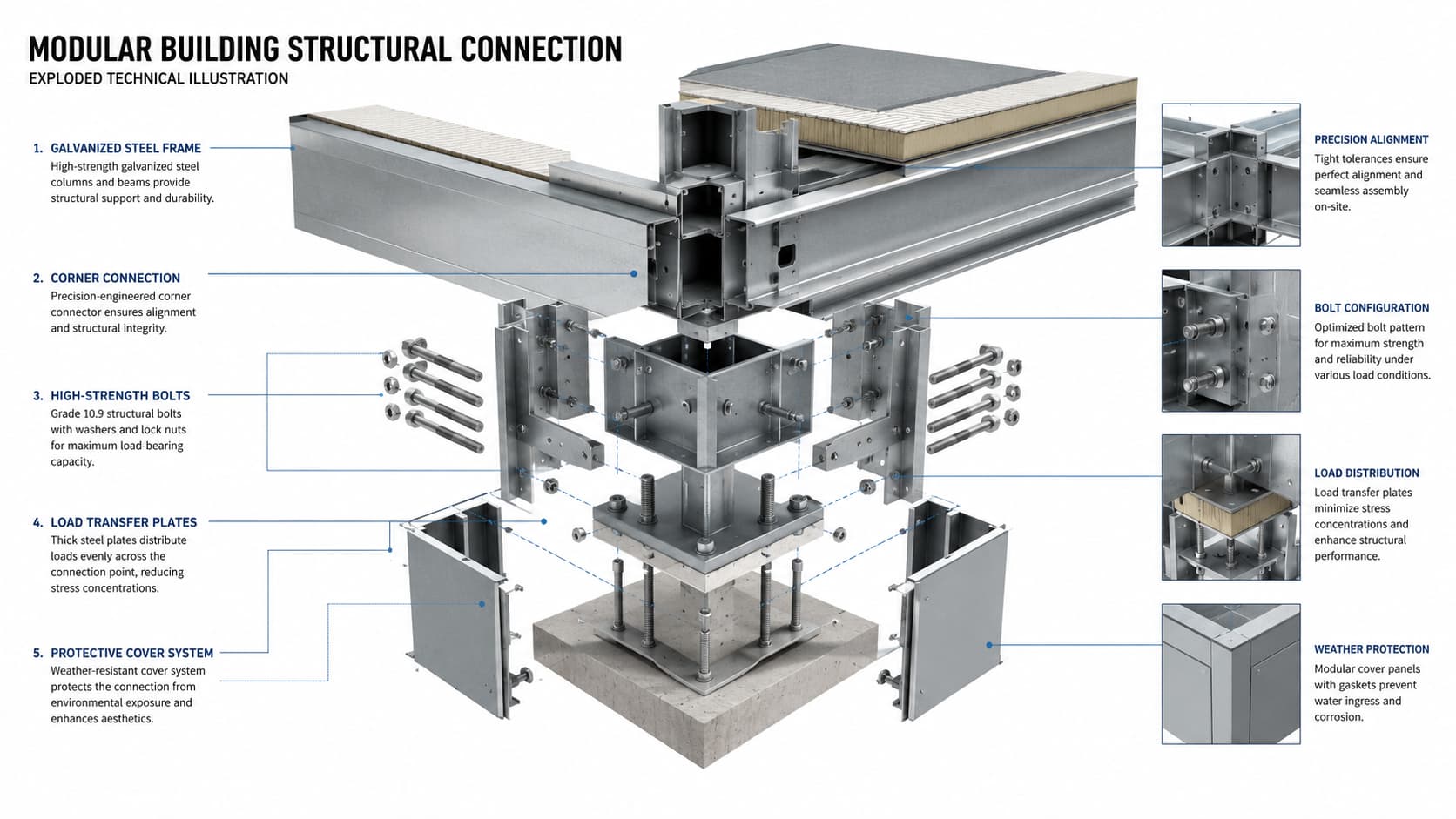
The connection system typically includes:
- High-strength structural bolts
- Precision corner connection components
- Steel columns and beams
- Floor and roof framing
- Load transfer plates
- Structural alignment devices
Each component performs a specific function, allowing individual modules to behave as one integrated building.
Why High-Strength Bolts Matter
The bolts used in modular construction are very different from ordinary construction fasteners.
Their purpose is not simply to keep two modules from separating.
Instead, they help:
- Lock modules into precise alignment
- Transfer structural loads between floors
- Resist movement caused by wind or vibration
- Maintain overall building stability
- Ensure long-term structural integrity
In many prefab worker accommodation projects, these structural bolts remain hidden after installation, yet they continue working throughout the building's service life.
This is why bolt selection is never based on appearance—it is based on engineering calculations.
Taller Buildings Require More Than Bigger Bolts
Another common misunderstanding is that building a taller modular structure simply requires stronger bolts.
In reality, increasing the height of a modular home changes the entire engineering approach.
As additional stories are added, engineers must consider:
- Dead loads
- Live loads
- Wind loads
- Snow loads
- Lateral forces
- Local building regulations
The connection system is then designed accordingly.
Higher buildings may require different bolt grades, additional connection points, reinforced structural members, or modified frame designs.
The bolt itself is only one part of a much larger structural calculation.
What Happens Between Two Modules?
When two modular units are joined together, many people imagine there is simply an empty gap hidden behind the walls.
In reality, this space is carefully engineered.
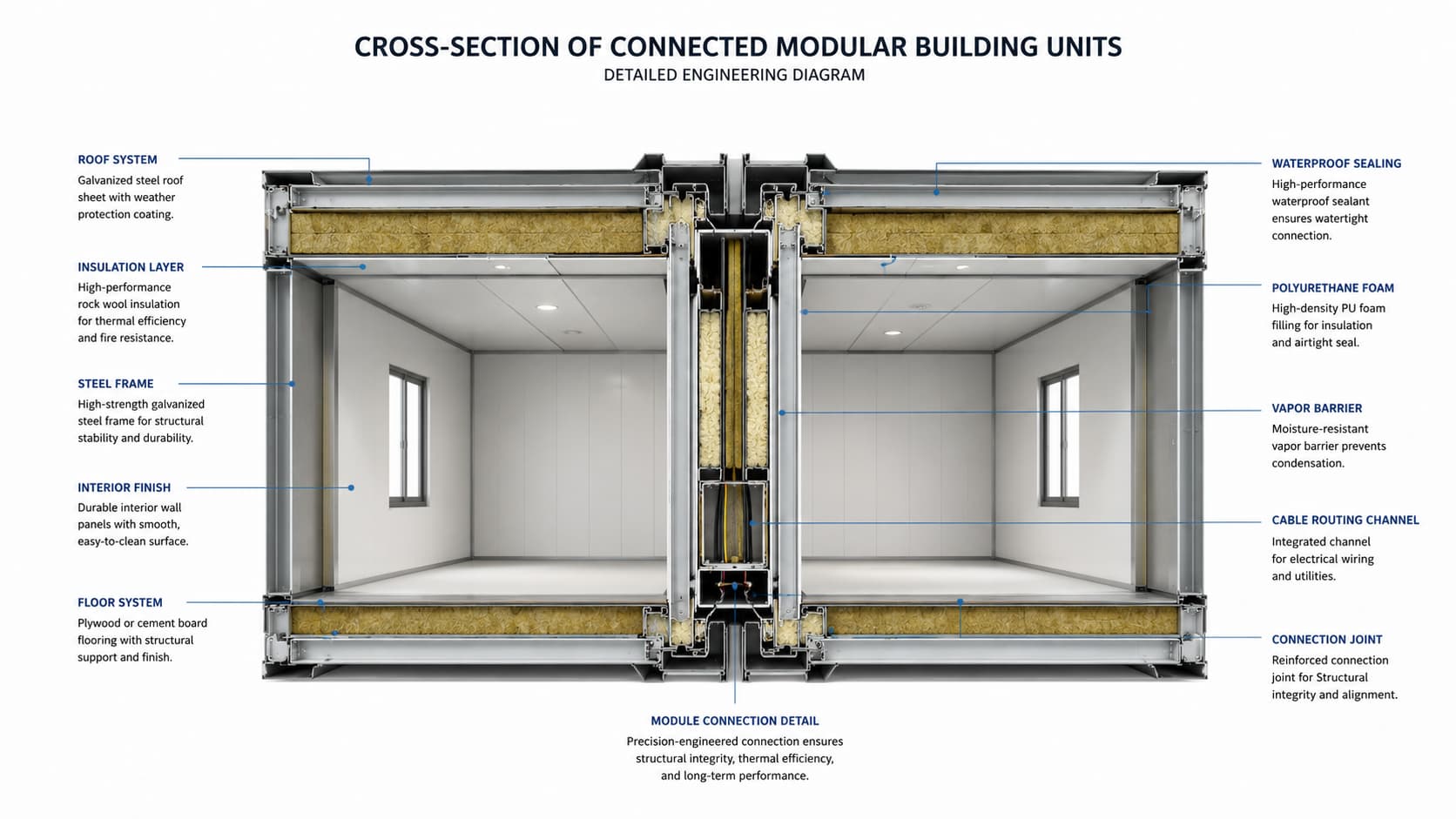
Depending on the project, the connection area may include:
- Thermal insulation
- Fire-resistant materials
- Waterproof sealing systems
- Acoustic insulation
- Vapor barriers
- Structural protection components
These materials help improve energy efficiency while protecting the connection from moisture, temperature changes, and long-term environmental exposure.
For projects located in cold climates or remote construction camps, this additional insulation layer can significantly improve indoor comfort and reduce heating energy consumption.
Why Are Connection Areas Covered?
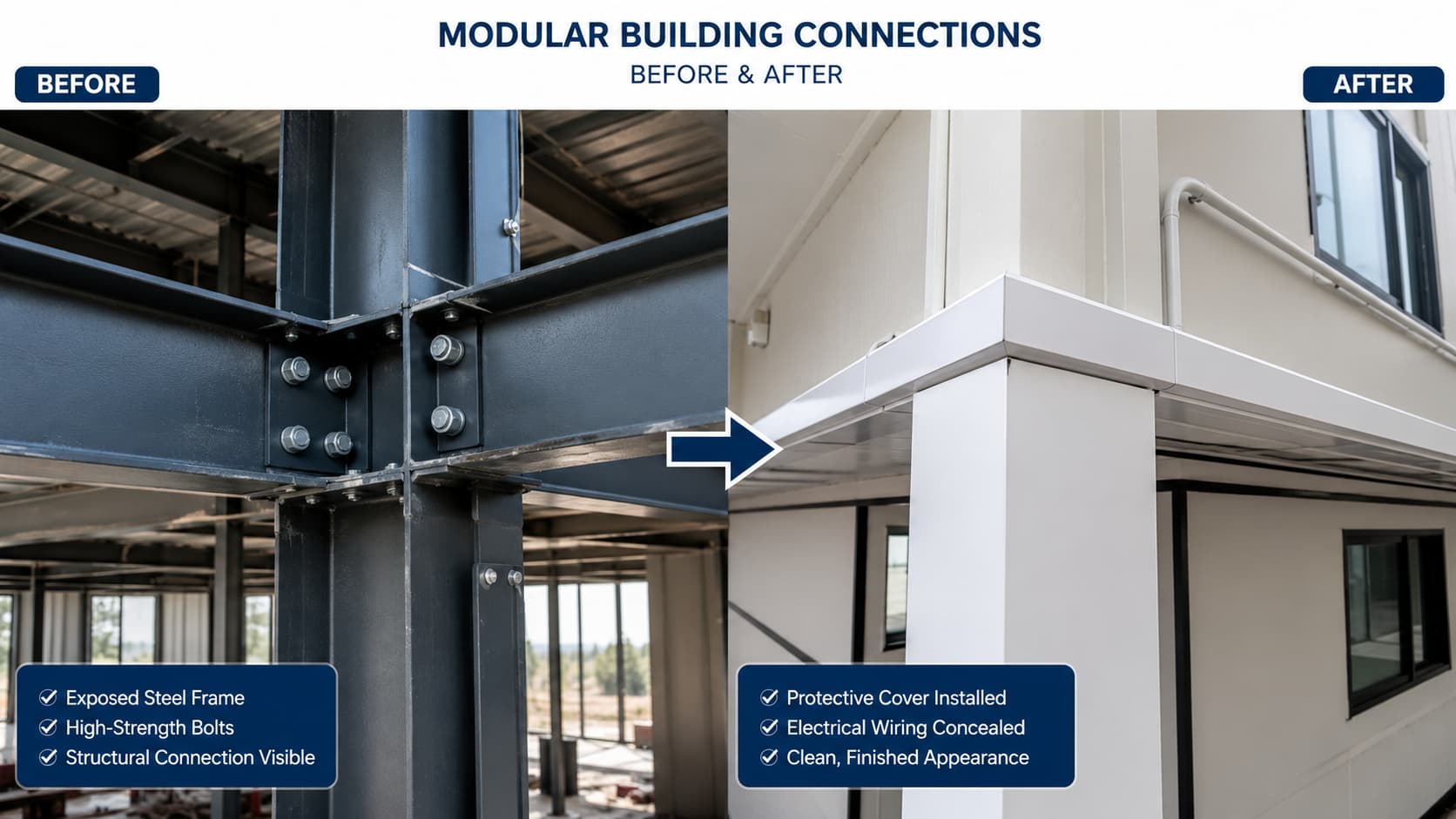
After installation, the connection points are often hidden behind protective covers.
Many people assume these covers exist only for appearance.
In reality, they serve several practical purposes.
Protective covers help:
- Shield connection components from weather exposure
- Improve corrosion resistance
- Prevent accidental impact
- Create clean interior finishes
- Conceal electrical cables
- Organize communication wiring
- Protect plumbing where applicable
By combining structural protection with utility management, these covers make the finished building both more durable and easier to maintain.
Can Modular Buildings Handle Strong Winds and Earthquakes?
Perhaps the most important question is whether modular buildings are actually safe.
The answer depends on engineering—not assumptions.
A properly designed modular building does not rely on a single bolt or a single connection point.
Instead, structural safety comes from the interaction of:
- Steel framing
- Structural connections
- Foundation design
- Load paths
- Building code compliance
- Professional engineering calculations
When these systems are designed together, modern prefab homes and worker accommodation buildings can perform reliably under demanding environmental conditions, including high winds, heavy snow, and seismic activity where permitted by local engineering standards.
The key is that every project should be designed according to its specific location and applicable building regulations.
Do Structural Bolts Need Maintenance?
Like every engineered building, modular structures benefit from regular inspections.
Although high-strength structural bolts are designed for long-term service, periodic maintenance helps ensure continued performance.

Routine inspections may include:
- Visual condition checks
- Corrosion inspection
- Connection alignment
- Protective coating assessment
- Structural maintenance following relocation
For modular buildings that are dismantled and reassembled multiple times, inspection becomes an important part of responsible asset management.
Good maintenance not only protects structural performance but also extends the building's service life.
The Strongest Part of a Modular Building Is Often the Part You Never See
When people admire a modular building, they usually notice the exterior finishes, windows, or architectural design.
Rarely do they think about the connection system hidden inside the walls.
Yet these unseen components are what allow individual modules to function as a single, stable structure.
The strength of a modular building is never determined by a few visible bolts alone.
It comes from thoughtful engineering, precision manufacturing, quality materials, and carefully designed structural connections working together.
The next time you watch a modular building being assembled in just a few hours, remember that the speed of installation is only the visible part of the story.
Behind every successful installation is an engineering system that may have taken months of design, testing, and refinement before the first bolt was ever tightened.
Interested in learning more about modular construction? Contact our team →