
How Space Capsule Houses Can Add Value to Existing Businesses
Business growth does not always require a larger building, a new location, or a major investment in expanding core operations. In many cases, existing businesses already have valuable resources that are not being fully utilized: unused outdoor areas, customer waiting time, seasonal visitor traffic, and small service needs that have yet to be addressed.
A hotel may have an attractive garden that serves mainly as a landscape feature. A ski resort may welcome hundreds of visitors every day but offer limited places to rest between activities. A campsite may have established accommodation facilities while overlooking opportunities to provide additional services and experiences.
These situations represent potential business opportunities. By introducing a small, independent, and purpose-designed space, operators may be able to add new services, improve customer experiences, and create additional sources of revenue without fundamentally changing their existing business model.
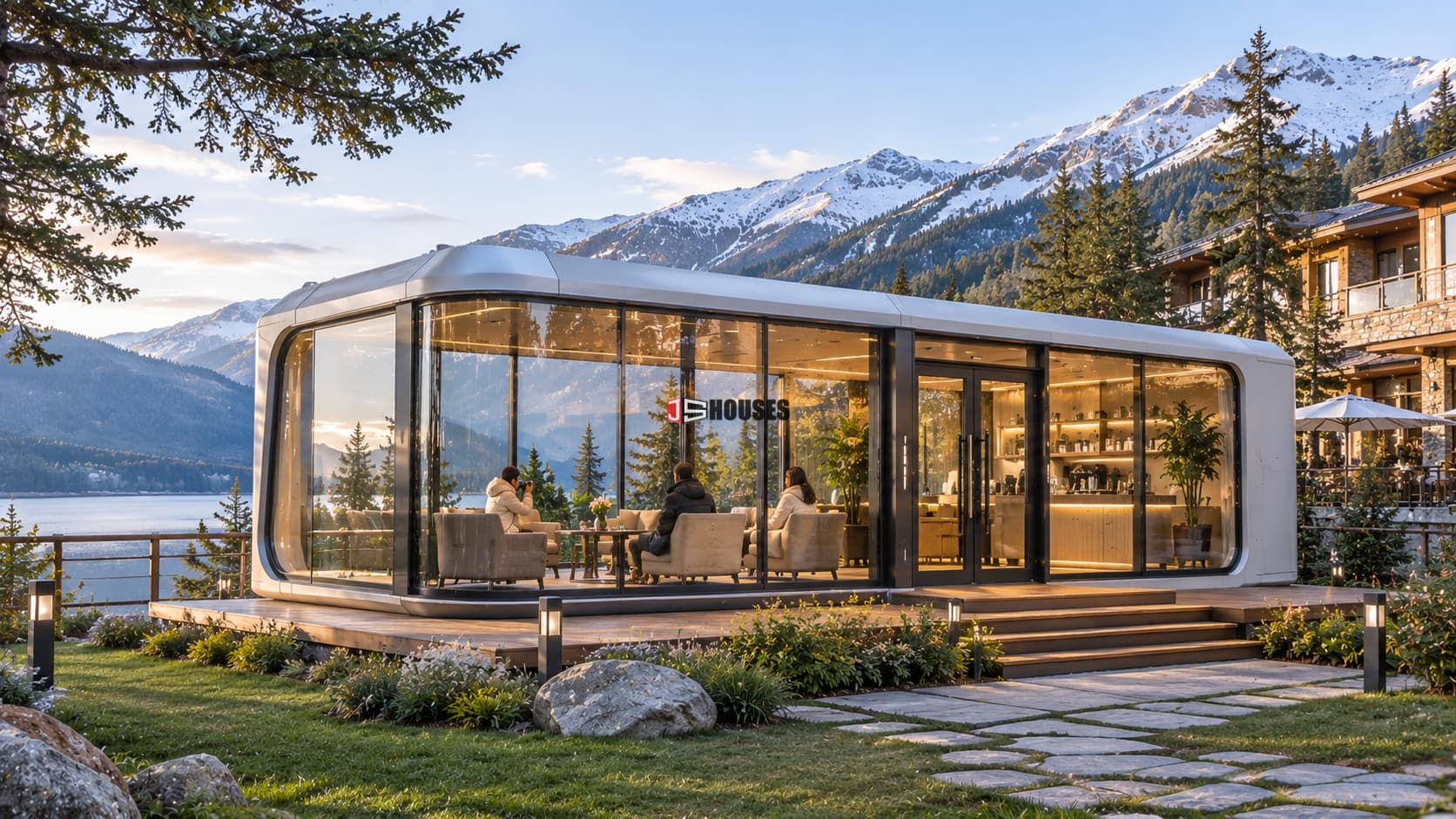
This is where a space capsule house can offer an interesting alternative. Rather than serving only as a standalone accommodation unit, it can also be considered a flexible modular space for businesses looking to explore new possibilities within their existing properties.
1. Turning Underused Spaces into New Business Opportunities
One of the easiest opportunities to overlook is the space a business already owns or manages. Not every part of a property needs to be occupied by its main facilities. Gardens, outdoor corners, visitor gathering areas, and spaces between existing buildings may have more potential than their current use suggests.
Instead of undertaking a major construction project, businesses can consider introducing an additional modular space to serve a specific purpose.
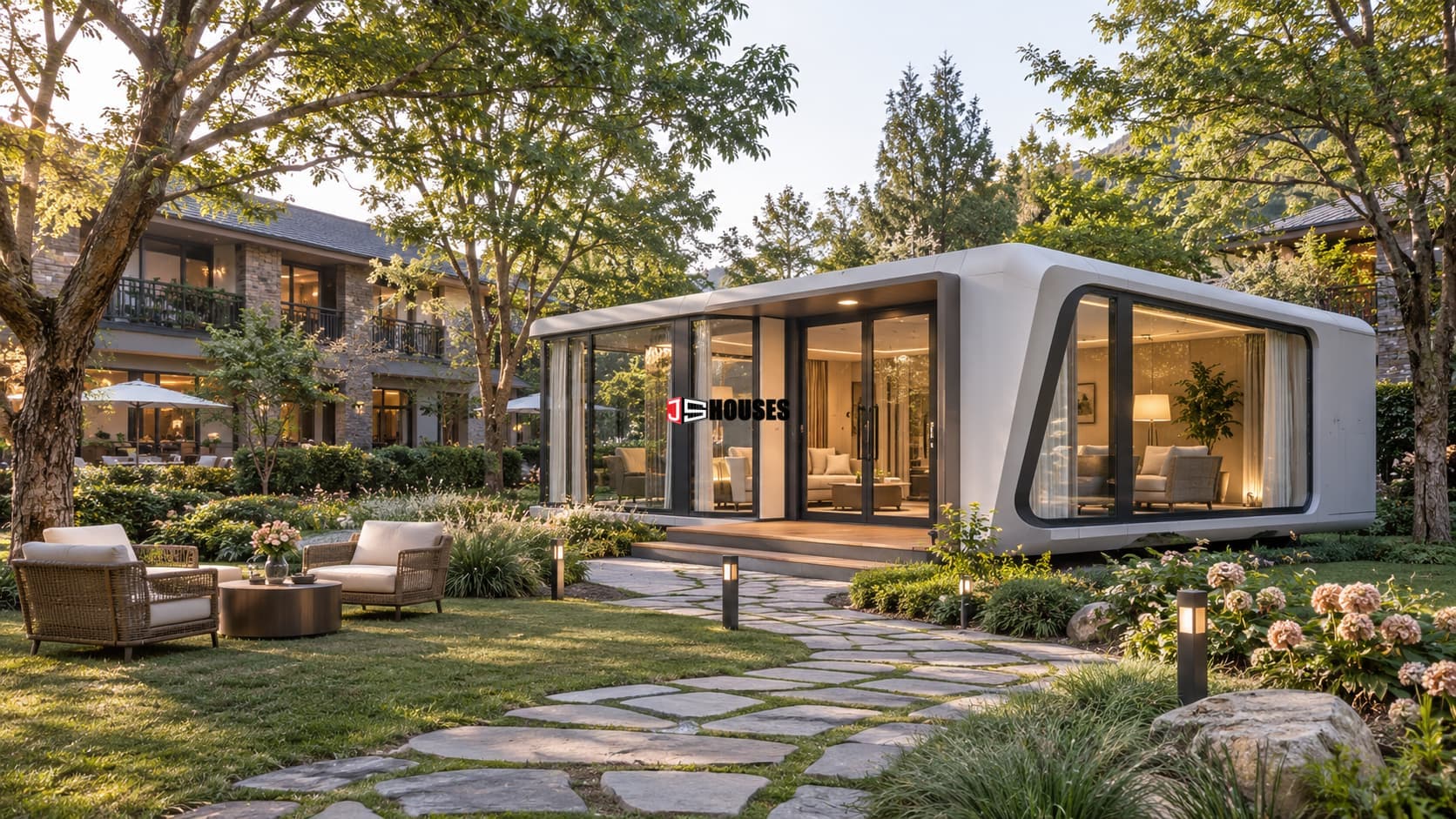
1.1 Unused Gardens and Outdoor Areas at Hotels and Resorts
Hotels and resorts often invest in landscaped gardens, swimming pools, terraces, and outdoor leisure areas to improve the overall guest experience. However, some of these spaces may remain largely decorative or be used only occasionally.
A compact independent building could turn part of an underused area into a more functional destination. Possible applications include:
- A private reading room or quiet relaxation lounge for hotel guests.
- A small tea room or specialty beverage space in a garden.
- A private room for family activities or small group gatherings.
- A boutique display space for local products and specialty gifts.
- A reservation-based private lounge near a swimming pool or outdoor recreation area.
The value is not necessarily limited to direct sales. A more functional outdoor area may encourage guests to spend additional time on the property and make better use of facilities that are already available.
1.2 Unused Corners in Tourist Attractions and Recreation Facilities
Tourist attractions, recreational parks, and outdoor activity centers often have visitor areas that are not fully developed. These may include spaces near viewpoints, entrances, parking areas, walking routes, or activity zones.
Depending on visitor demand, a small modular building could serve as:
- A scenic viewing lounge where visitors can take a break and enjoy the surroundings.
- A photography or themed experience room.
- A visitor information point for local attractions and activities.
- A small waiting area for guided tours or scheduled outdoor activities.
These facilities do not need to become major attractions themselves. Their purpose is to make existing visitor areas more useful and comfortable, helping operators provide additional services without significantly changing the overall site layout.
1.3 Additional Functional Areas Within Existing Campsites
A campsite may already have tents, cabins, or RV parking areas as its main accommodation products. However, the spaces between accommodation units and shared activity areas may offer opportunities for additional facilities.
For example, a capsule house could be configured as a children's activity room, equipment storage area, private gathering space, or staff service room. These applications may not directly increase the number of rentable accommodation units, but they can help the campsite operate more efficiently and offer a more complete experience.
For an established business, improving the functionality of existing facilities can sometimes be more practical than expanding the core accommodation capacity.
2. Capturing Small but Valuable Customer Needs
Customers do not only have the needs that bring them to a business in the first place. During a hotel stay, a ski trip, a visit to a scenic area, or an outdoor activity, they may also need convenient services, private spaces, or small purchases that were not part of their original plans.
These additional needs are often easy to overlook because each one may represent a relatively small transaction. However, when a business already has a steady flow of visitors, meeting these needs can create additional value from existing customer traffic.
2.1 Temporary Convenience and Personal Services
Consider a resort where guests spend most of the day outdoors. They may occasionally need to charge their devices, store personal belongings, purchase sunscreen, change clothes, or take a short break away from crowded public areas.
A small independent service unit could provide some of these conveniences without requiring the main hotel building to be redesigned.
Potential uses include:
- A device charging and small-item storage station.
- A private changing room near outdoor swimming or recreation facilities.
- A self-service convenience point for daily essentials.
- A compact rest area for visitors waiting for transportation or activities.
The business opportunity comes from convenience. Customers may not travel to a destination specifically for these services, but they may be willing to pay for them when they are available at the right place and time.
2.2 Premium Personal Experiences
Some visitors are willing to pay for a more private or distinctive experience, even when the basic service is already included in their hotel stay or entrance ticket.
For example, a resort could offer a small private lounge for couples, a quiet room for reading, or a dedicated space for a family to enjoy time together. A scenic destination might provide a reservation-based viewing room where guests can enjoy the landscape away from busy public areas.
These spaces could be offered through hourly reservations, premium packages, or exclusive guest services, depending on the business model.
The important point is that the additional space does not need to replace an existing facility. It can provide an optional upgrade for customers who want something beyond the standard experience.
2.3 Local Products and Specialty Retail
Tourist destinations often attract visitors who are interested in local culture, regional food, handicrafts, and souvenirs. However, not every attraction has enough space or demand to justify building a permanent retail facility.
A small modular retail unit can provide a more focused way to test this opportunity. It could be used to display and sell:
- Local handicrafts and handmade products.
- Regional snacks, packaged food, and specialty products.
- Travel souvenirs and destination-themed merchandise.
- Outdoor accessories and locally produced goods.
For destinations in Central Asia, this could include locally made crafts, regional food products, and travel-related merchandise that reflect the identity of the surrounding area.
Such a space can also help local producers reach visitors without requiring them to establish a separate permanent shop.
2.4 Services That Support the Main Customer Journey
Sometimes the most useful additional facility is not a retail space or a place to relax. It is a small service point that makes the customer's overall journey easier.
For example, an outdoor recreation center could provide a dedicated equipment preparation area. A tourist attraction could establish a small booking and consultation point. A resort could add a private meeting room for guests who need to handle a short business call during their stay.
These functions may not generate substantial revenue individually, but they can improve service quality, reduce pressure on existing facilities, and make the main business more convenient to use.
3. Creating New Experiences Without Changing Core Operations
Not every business opportunity needs to be measured by immediate sales. Some additional facilities create value by making a destination more memorable, improving customer satisfaction, or giving visitors a reason to spend more time on the property.
For businesses that already have an established customer base, these improvements can support differentiation without requiring a complete change in their core operations.
3.1 Family and Children-Friendly Spaces
Family visitors often have needs that are different from those of individual travelers. Parents may need a quiet place for children to rest, read, play, or take a break from outdoor activities.
Hotels, resorts, and recreation centers could consider adding a small indoor activity room or family lounge. Depending on the intended use, the space might include simple play equipment, seating, books, or interactive activities.
This type of facility can make a destination more attractive to families while helping parents enjoy their visit more comfortably. It may also create opportunities for family-oriented packages or supervised activities, subject to the relevant safety and operational requirements.
3.2 Social Media-Friendly and Interactive Spaces
Visitors increasingly enjoy sharing photographs and experiences from the places they visit. A distinctive small building can become part of a destination's visual identity, especially when its design complements the surrounding landscape.
A modular space could be configured as:
- A themed photography room or creative photo studio.
- A small interactive exhibition space.
- A destination-branded visitor experience point.
- A seasonal display area for special events or promotional campaigns.
For the operator, the potential value extends beyond the physical space. Visitors may share their experiences online, increasing the destination's visibility and creating additional organic exposure.
However, a visually distinctive building should still serve a clear purpose. Its appearance may attract attention, but its functionality and connection with the overall visitor experience determine whether it provides lasting value.
3.3 VIP, Private Meeting, and Small Event Spaces
Restaurants, resorts, sports clubs, and recreational facilities may occasionally receive requests for private meetings, small celebrations, or exclusive gatherings. Their existing public areas may not always be suitable for these activities.
An independent modular room could provide an additional option for:
- Small private dining or celebration arrangements.
- Business meetings and short discussions.
- VIP guest reception.
- Private group activities or workshops.
Rather than constructing a large event hall, businesses could evaluate whether a smaller dedicated space is sufficient for the demand they actually receive.
4. Exploring Seasonal and Temporary Business Opportunities
Many businesses in tourism and outdoor recreation experience seasonal changes in visitor numbers and customer needs. A facility that is useful during one season may have a different purpose during another.
This creates an opportunity to consider modular spaces as part of a broader seasonal service strategy.
4.1 Winter Tourism and Ski Resort Support Facilities
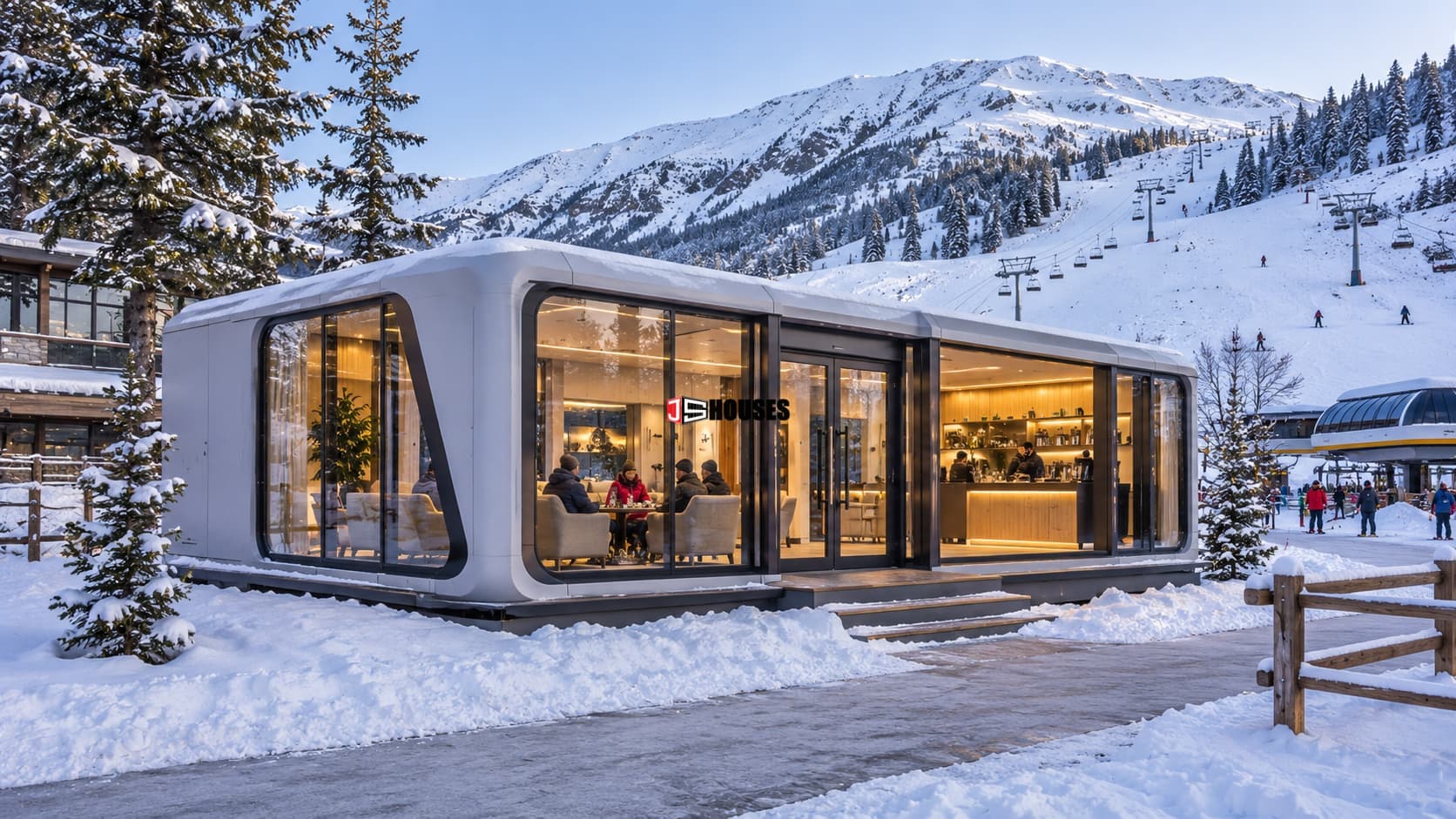
In destinations with cold winters, such as many areas of Kazakhstan and Kyrgyzstan, outdoor tourism can create demand for small indoor facilities near activity zones.
Beyond the main ski facilities, visitors may need somewhere to warm up, organize their equipment, or take a short break between activities.
A modular space could potentially serve as:
- A warm-up lounge with seating and hot beverage service.
- A small equipment preparation or storage room.
- A private changing and rest area.
- A compact visitor service point near a ski area or outdoor activity zone.
These facilities can complement the existing ski business rather than compete with its main services. Their value lies in improving the visitor experience during periods when outdoor conditions may be uncomfortable.
4.2 Summer Leisure and Lakeside Tourism
During warmer months, lakeside resorts and outdoor recreation areas may experience increased demand for temporary services. Visitors may need equipment rentals, changing facilities, refreshments, or places to rest away from direct sunlight.
For businesses operating near lakes and popular summer destinations, an additional modular unit could be considered for:
- Water sports equipment rental and collection.
- A small beach convenience point.
- Changing and personal storage facilities.
- A shaded indoor rest area for families and visitors.
For example, an existing lakeside resort could add a small rental and service point without changing the layout or management of its main accommodation facilities.
4.3 Events, Festivals, and Temporary Activities
Outdoor festivals, sporting events, seasonal markets, and regional celebrations often create short-term demand for additional service spaces. Organizers may need temporary reception areas, private staff rooms, merchandise displays, or visitor lounges.
A modular building could be planned as an event support facility, depending on transportation arrangements, site preparation, installation requirements, and the intended duration of use.
For businesses that regularly host seasonal events, having a reusable modular facility may be worth evaluating against the cost of repeatedly arranging temporary structures or renting separate facilities.
Its suitability will depend on whether the unit can be transported, installed, maintained, and connected to utilities efficiently for the specific event location.
5. Why Consider a Space Capsule House for These Applications?
After identifying potential business opportunities, the next question is how to create the additional space without introducing unnecessary complexity into existing operations.
A space capsule house is one option worth considering because it combines an independent building unit with a distinctive architectural appearance and the possibility of customized interior configurations.
5.1 An Independent Space Without Expanding the Main Building
One practical advantage of a modular building is that it can provide a separate functional area outside the main building. This may be useful when an existing hotel, resort, or recreation facility has limited indoor space but still has suitable outdoor areas.
For example, a hotel could add a private lounge near its garden, while a campsite could establish a separate service room near its shared activity area.
The new unit can be planned around a specific function, helping businesses separate additional services from their existing operations.
5.2 Flexible Interior Configurations
Different commercial applications require different interior arrangements. A retail space needs display and storage areas, while a private lounge needs comfortable seating and appropriate lighting. A visitor service point may require a reception counter, equipment storage, and electrical connections.
Depending on the product configuration and customization scope, a capsule house can be planned around the intended use rather than relying on a single standard interior layout.
When discussing a project with a supplier, businesses should clarify the intended function, number of users, furniture requirements, utility connections, and any specialized equipment that needs to be accommodated.
5.3 Factory Production and More Organized Project Planning
For existing businesses, construction work can interfere with normal operations. A factory-produced modular building may help reduce the amount of work required at the installation site, depending on the level of prefabrication and the site conditions.
Components can be prepared under controlled manufacturing conditions, while site preparation, foundation work, transportation, and utility connections are arranged as part of the project plan.
When evaluating a space capsule house manufacturer, buyers should look beyond the exterior design. It is important to understand the production process, material specifications, customization capabilities, transportation arrangements, installation guidance, and technical support available for the project.
5.4 Insulation and Climate-Related Configuration
For businesses operating in Central Asia, the local climate is an important part of building selection. A space intended for year-round use may need to accommodate cold winters, hot summers, and significant temperature differences between seasons.
An insulated capsule house can be considered for applications where indoor comfort and thermal performance are important. However, insulation performance depends on the complete building configuration, including wall and roof panels, doors, windows, joints, ventilation, and heating or cooling equipment.
Before choosing a unit for a specific location, businesses should confirm the insulation specifications and discuss local temperature conditions with the supplier. Heating, cooling, ventilation, and utility systems should be selected according to the intended use and local engineering requirements.
5.5 A Way to Test Additional Business Opportunities
Not every new business idea needs to begin with a large investment. An operator may first identify one unmet customer need and evaluate whether a small additional facility is justified.
For example, a resort could begin by testing demand for a private relaxation space. A campsite might introduce a small convenience point before expanding its retail offering. A tourist attraction could assess visitor interest in a dedicated viewing lounge.
This approach allows businesses to connect facility planning with actual customer demand rather than building more space simply because it is available.
6. What Should Businesses Consider Before Adding a Modular Space?
A modular building can create new possibilities, but its commercial value depends on whether the proposed application makes sense for the existing business. Before placing an order, operators should evaluate both the business opportunity and the practical requirements of the site.
6.1 Identify a Real Customer Need
Start by observing how customers use the existing property. Where do they spend time? What services do they frequently request? Are there situations where they leave the property to purchase something or access a facility that could reasonably be provided on-site?
Customer feedback, service records, booking information, and staff observations can all help identify opportunities. A new space should address a recognizable need rather than simply add another building to the property.
6.2 Evaluate the Location and Available Space
The proposed location should be convenient for customers and compatible with the existing site layout. Consider pedestrian access, visibility, privacy, emergency access, surrounding facilities, and the relationship between the new unit and the main business.
A location that looks attractive on a site plan may not necessarily be practical during daily operation. The movement of visitors, service staff, delivery vehicles, and maintenance personnel should all be considered.
6.3 Check Utilities and Site Infrastructure
Different uses require different infrastructure. A simple visitor lounge may need only electrical connections, while a food service space may require water supply, drainage, ventilation, and specialized equipment.
Before finalizing the configuration, confirm:
- Foundation and ground preparation requirements.
- Electrical capacity and connection locations.
- Water supply and drainage, where required.
- Heating, cooling, and ventilation requirements.
- Transportation access and unloading conditions.
- Local building approvals, fire safety, accessibility, and business licensing requirements.
6.4 Match the Configuration to the Intended Business Function
A building designed for relaxation does not necessarily need the same layout as one intended for retail or food preparation. Businesses should define the main function before discussing dimensions, interior finishes, equipment, and technical systems.
For example, a small shop may prioritize product display and storage, while a private lounge may require better acoustic separation, comfortable seating, and suitable lighting. Food-related applications may need specialized surfaces, ventilation, hygiene arrangements, and utility connections.
6.5 Consider Local Climate and Long-Term Operation
For projects in Kazakhstan, Kyrgyzstan, Uzbekistan, and other Central Asian markets, climate conditions and seasonal operating patterns should be considered during the planning stage.
Businesses should discuss expected temperatures, wind and snow conditions, summer heat, intended occupancy, and operating hours with the supplier. The selected structure, insulation, doors and windows, and utility systems should be appropriate for the actual site requirements.
It is also important to consider maintenance access, cleaning, equipment replacement, and the long-term operating costs of the additional facility.
| Planning Area | Key Questions | Business Objective |
|---|---|---|
| Customer demand | What additional services do visitors need? | Identify a realistic business opportunity |
| Location | Is there a suitable and accessible area? | Integrate the new space into existing operations |
| Function | What activities and equipment will it support? | Choose the right layout and configuration |
| Infrastructure | Are power, water, drainage, and ventilation available? | Ensure practical daily operation |
| Climate | What are the local temperature and weather conditions? | Select suitable building specifications |
| Compliance | What permits and safety requirements apply? | Support lawful and safe operation |
| Operating costs | What maintenance and utility expenses are expected? | Evaluate long-term commercial value |
Small Spaces Can Create New Business Possibilities
Expanding an existing business does not always mean building a larger hotel, adding more accommodation units, or investing in an entirely new operation. Sometimes, the next opportunity is already within the property, waiting to be developed.
An underused garden, an overlooked visitor area, a seasonal service gap, or a small customer need may all represent opportunities to improve an existing business. A dedicated modular space can provide a practical way to explore some of these possibilities while keeping the main operation largely unchanged.
For hotels, resorts, campsites, tourist attractions, and outdoor recreation businesses, a space capsule house can be more than an accommodation unit. Depending on its configuration, it may become a private lounge, a visitor service point, a small retail space, or another facility that supports the existing business.
The best approach is to start with a clear business need, evaluate the available space, and then select a suitable building configuration. A well-planned additional facility should not simply occupy more land. It should make the existing property more useful and create value for both the business and its customers.
At JS-Houses, we provide modular building solutions for different project requirements. If you are considering adding a new functional space to an existing hotel, resort, campsite, or commercial property, our team can discuss suitable configurations based on your intended application, site conditions, and project needs.
Explore our Space Capsule Modular House to learn more about the product and discuss a customized solution for your project.
Frequently Asked Questions
1. Can a space capsule house be used for purposes other than accommodation?
Yes. Depending on its design and configuration, a space capsule house may be adapted for applications such as private lounges, visitor service points, small retail spaces, information centers, and other functional facilities. The interior layout and technical systems should be selected according to the intended use.
2. Can an existing hotel or resort add a capsule house without expanding its main building?
Potentially, yes. If the property has a suitable outdoor area and meets the relevant planning and building requirements, a separate modular unit may provide additional functional space without extending the main building. Site access, foundations, utilities, and local approvals should be checked first.
3. Is an insulated capsule house suitable for Central Asian climates?
An insulated capsule house can be configured for different climate conditions, but suitability depends on its insulation specifications, doors and windows, joints, ventilation, heating and cooling systems, and the local project requirements. Buyers should confirm the relevant technical specifications with the manufacturer before ordering.
4. Can the interior of a capsule house be customized for commercial use?
Interior configurations can be discussed according to the intended application and the manufacturer's available customization scope. Requirements may include reception counters, shelving, seating, storage, lighting, electrical connections, and other functional equipment.
5. What should I look for when choosing a space capsule house manufacturer?
Consider the manufacturer's production capabilities, material specifications, insulation details, customization options, quality control procedures, transportation arrangements, installation guidance, and experience with similar projects. Clear communication about the intended application is also important before production begins.
6. Is a capsule house a good investment for an existing business?
It depends on customer demand, the location, the intended function, initial investment, operating costs, and local requirements. A capsule house may create additional value by supporting new services or improving customer experience, but businesses should evaluate the commercial feasibility of the proposed application before making a purchasing decision.